Blog
Achieving Consistent Output Across Mechanical and PCB Assemblies
For original equipment manufacturers (OEMs) and hardware companies, the challenge of maintaining consistent output across diverse manufacturing disciplines—from precision mechanical parts to complex printed circuit board (PCB) assemblies and final product integration—is paramount. Inconsistent quality or performance at any stage can lead to costly rework, schedule delays, and ultimately, product failure or market rejection. The question isn't just who can manage this, but how they achieve it with unwavering reliability.
This guide explores the critical elements of integrated contract manufacturing that ensure seamless coordination and consistent output across all phases of your product's creation. We'll delve into the methodologies and advantages of partnering with a single-source provider capable of handling both mechanical and electronics manufacturing under one roof, thereby mitigating risks and optimizing your supply chain.
The Challenge of Disjointed Manufacturing
Traditional manufacturing approaches often involve engaging multiple vendors: one for CNC machined parts, another for sheet metal fabrication, a third for PCB assembly, and perhaps a fourth for final box build. While this can seem like a way to leverage specialized expertise, it frequently introduces significant challenges:
- Tolerance Stacking Issues: Discrepancies in tolerances between mechanically manufactured components and electronic assemblies can lead to fitment problems, requiring costly adjustments or redesigns.
- Communication Gaps: Hand-offs between different suppliers can result in misinterpretations of specifications, leading to errors and delays.
- Quality Control Discrepancies: Each vendor may have different quality assurance protocols, making it difficult to ensure uniform quality across all components of a final product.
- Extended Lead Times: Managing multiple vendor schedules and logistics adds complexity and can significantly prolong overall production timelines.
- Lack of Single-Point Accountability: When issues arise, determining responsibility across multiple suppliers can be a time-consuming and frustrating process.
These challenges directly impact product durability, uptime, safety, and ultimately, the total cost of ownership for your end-users. A fragmented manufacturing process can erode profit margins and damage brand reputation.
The Integrated Manufacturing Solution: A Coordinated Approach
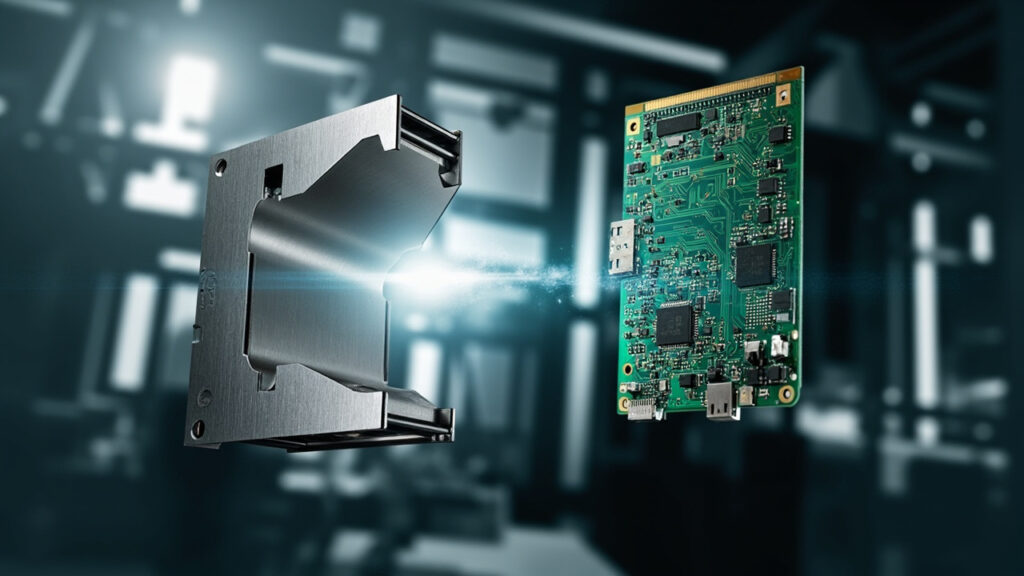
An integrated contract manufacturer provides a unified solution, bringing mechanical and electronics manufacturing capabilities together. This approach is designed to eliminate the common pitfalls of disjointed production by fostering a cohesive environment where all processes are managed under a single quality system and engineering oversight.
Core Components of Integrated Manufacturing for Consistency
- Unified Engineering and Design for Manufacturability (DFM):
- Early Collaboration: Engineers specializing in both mechanical and electrical design collaborate from the outset, identifying potential issues where mechanical components interface with PCBs and vice-versa. This proactive approach prevents costly redesigns later in the production cycle.
- Coordinated Tolerances: By understanding the requirements of both disciplines, integrated manufacturers can ensure that mechanical components are machined or fabricated to tolerances that perfectly accommodate PCB assemblies, preventing fitment issues and ensuring optimal performance.
- Material Compatibility: Expertise across both domains ensures that chosen materials for mechanical enclosures, heat sinks, and mounting hardware are compatible with the thermal and electrical requirements of the electronics.
- In-House Mechanical Manufacturing Capabilities:
- Precision CNC Machining: Utilizing advanced multi-axis milling and turning centers, complex mechanical parts are produced with high accuracy and repeatability. This includes enclosures, brackets, heat sinks, and custom fixtures.
- Precision Sheet Metal Fabrication: Capabilities for forming, bending, and welding sheet metal components ensure that housings and structural elements meet exact specifications for electronic integration.
- Quality Control at the Source: Mechanical components are inspected immediately after production, often with direct feedback loops to the electronics assembly team, ensuring they are ready for the next stage without delays.
- In-House Electronics Manufacturing Capabilities:
- PCB Assembly (PCBA): State-of-the-art surface mount technology (SMT) lines and through-hole assembly processes ensure high-quality, reliable PCB production. This includes fine-pitch component placement and complex board designs.
- Rigorous Testing: Comprehensive in-circuit testing (ICT), functional testing (FCT), and automated optical inspection (AOI) are applied to PCBs to guarantee electrical integrity and performance before integration.
- Component Sourcing Expertise: Leveraging established supply chain networks for electronic components helps mitigate risks of obsolescence and ensures consistent quality of parts.
- Seamless Final Assembly and Box Build:
- Single-Point Accountability: With all components manufactured and assembled under one roof, the responsibility for the final product's quality rests with a single entity. This simplifies communication and problem-solving.
- Optimized Assembly Processes: Assembly technicians are familiar with both the mechanical and electronic aspects of the product, leading to more efficient and accurate final integration.
- Comprehensive Functional Testing: Full system-level testing ensures that the integrated product performs as intended, validating the synergy between mechanical and electronic subsystems.
Benefits for Operations and Procurement Teams
Choosing an integrated contract manufacturer offers tangible advantages for procurement and operations managers focused on efficiency, reliability, and total cost of ownership:
- Reduced Supply Chain Complexity: Consolidating vendors simplifies procurement, reduces administrative overhead, and minimizes the risk of supply chain disruptions.
- Improved Product Quality and Reliability: Coordinated manufacturing processes and unified quality control lead to fewer defects, higher product consistency, and enhanced long-term reliability.
- Faster Time-to-Market: Streamlined communication, reduced hand-offs, and efficient parallel processing accelerate development and production cycles.
- Cost Efficiencies: While initial unit costs might seem comparable, the reduction in rework, scrap, logistics, and management overhead often results in a lower total cost of ownership.
- Enhanced Design Flexibility: The ability to iterate designs quickly with integrated DFM feedback allows for greater innovation and responsiveness to market demands.
- Production Continuity and Supply-Chain Security: Blanket order inventory programs and a single, dedicated partner provide greater stability and predictability in production, crucial for maintaining uptime and meeting customer commitments.
Applications and Industries Benefiting from Integrated Manufacturing
Industries requiring high precision, reliability, and complex electromechanical integration are ideal candidates for this manufacturing model. This includes:
- Medical Devices: Where precision, reliability, and compliance are non-negotiable.
- Aerospace & Defense: For critical systems requiring robust mechanical and electronic integration.
- Industrial Automation: For control systems, robotics, and machinery where uptime is critical.
- Telecommunications: For networking equipment and infrastructure components.
- Consumer Electronics (High-End): For products demanding superior build quality and performance.
Frequently Asked Questions
How does an integrated manufacturer ensure consistent quality between mechanical and electronic components?
An integrated manufacturer achieves consistency through unified engineering teams that apply Design for Manufacturability (DFM) principles across both mechanical and electronic designs. This ensures coordinated tolerances, material compatibility, and a single quality management system overseeing all production stages, from individual part fabrication to final assembly and testing.
What kind of testing is performed to verify the integration of mechanical and PCB assemblies?
Integrated manufacturers conduct a range of tests, including in-process inspections of mechanical parts, automated optical inspection (AOI) and in-circuit testing (ICT) for PCBs, and comprehensive functional testing (FCT) at the sub-assembly and final box-build stages. This verifies both individual component integrity and the seamless operation of the combined electromechanical system.
Can an integrated manufacturer help with design optimization for both mechanical and electronic aspects?
Yes, a key advantage of integrated manufacturing is the ability to provide holistic design-for-manufacturability (DFM) advisory. This involves engineers with expertise in both mechanical and electrical domains collaborating to optimize designs for cost-effectiveness, manufacturability, performance, and reliability, identifying potential issues before production begins.
How does this approach impact lead times compared to using separate vendors?
Integrated manufacturing typically reduces overall lead times. By eliminating the need for multiple vendor hand-offs, streamlining communication, and allowing for parallel processing of mechanical and electronic sub-assemblies under one roof, the entire production cycle is more efficient and less prone to delays.
What are the benefits for supply chain security when using a single integrated partner?
Partnering with a single integrated manufacturer enhances supply chain security by consolidating vendor relationships, simplifying logistics, and often allowing for blanket order inventory programs. This reduces exposure to risks associated with managing multiple suppliers, such as component shortages, quality variances, and logistical complexities, ensuring greater production continuity.
Your Partner for Coordinated Manufacturing Excellence
Achieving consistent output across mechanical parts, PCB assemblies, and final product integration is not merely a goal; it's a fundamental requirement for product success and operational efficiency. By choosing an integrated contract manufacturing partner, you gain a single point of accountability, streamlined processes, and the assurance that every component, from the smallest machined part to the most complex PCB, works in perfect harmony within your final product.
This approach minimizes risks, optimizes costs, and delivers the reliable, high-quality products your market demands. Engage with a partner who understands the intricate relationship between mechanical precision and electronic functionality to ensure your next project achieves unparalleled consistency and performance.