
Blog
Qualifying a Contract Manufacturer for Precision Electromechanical Assemblies
Selecting the right contract manufacturer (CM) for precision electromechanical assemblies is a critical decision that directly impacts product quality, time-to-market, and total cost of ownership. For OEMs and hardware companies, the complexity of integrated mechanical and electronic components demands a partner with specialized expertise, robust processes, and a proven track record. This guide outlines the essential criteria to consider when qualifying a CM, ensuring you secure a partner capable of delivering consistent, high-quality assemblies.
The Unique Challenges of Electromechanical Assemblies
Electromechanical assemblies combine the intricate world of electronics with the precision of mechanical engineering. This integration presents unique challenges:
- Tolerance Stacking: Mechanical tolerances must align perfectly with electronic component placement and connections.
- Interference and Compatibility: Ensuring electronic signals are not disrupted by mechanical vibration, heat, or electromagnetic interference (EMI).
- Material Selection: Choosing materials that satisfy both mechanical strength and electrical conductivity/insulation requirements.
- Assembly Complexity: Coordinating multiple disciplines, from PCB population to wiring harnesses, enclosures, and final testing.
- Design for Manufacturability (DFM): The need for early-stage collaboration to optimize designs for efficient, cost-effective, and reliable production.
Given these complexities, a CM that offers integrated mechanical and electronics manufacturing under one roof provides significant advantages, streamlining communication, reducing logistical overhead, and ensuring coordinated quality control.
Key Qualification Criteria for Electromechanical Assembly CMs
When evaluating potential contract manufacturers, focus on these critical areas to ensure a successful partnership:
1. Integrated Capabilities: Mechanical and Electronics Under One Roof
The most significant advantage in electromechanical assembly is a CM that can handle both mechanical and electronic manufacturing processes in-house. This eliminates the need to manage multiple vendors, reduces shipping costs and lead times between stages, and minimizes the risk of miscommunication or blame-shifting.
- Mechanical Manufacturing: Look for expertise in:
- CNC Machining and Multi-Axis Milling: For precision components, housings, and fixtures.
- Precision Sheet Metal Fabrication: For enclosures, brackets, and structural elements.
- Welding and Finishing: For robust structural integrity and aesthetic requirements.
- Mechanical Assembly and Box Builds: The ability to integrate all mechanical components into a finished product.
- Electronics Manufacturing: Essential capabilities include:
- PCB Assembly (PCBA): Surface Mount Technology (SMT) and Through-Hole Technology (THT) population.
- Component Sourcing and Management: Access to reliable supply chains for electronic components.
- Cable and Wire Harness Assembly: Custom solutions for internal connectivity.
- Functional Testing: Comprehensive testing of electronic circuits and integrated systems.
Four Points Platinum Advantage: As an integrated mechanical and electronics contract manufacturer, Four Points Platinum provides a single source for both disciplines. This holistic approach ensures seamless coordination of tolerances and fit, from individual components to complete box-build assemblies.
2. Engineering Expertise and Design for Manufacturability (DFM)
A truly valuable CM offers more than just manufacturing services; they provide engineering insights that optimize your design for production. DFM consultation can significantly reduce costs, improve reliability, and accelerate time-to-market.
- Early Engagement: A CM that engages early in your design process can identify potential manufacturing challenges before they become costly problems.
- Tolerance Analysis: Expertise in analyzing and managing tolerance stack-ups across mechanical and electronic interfaces.
- Material Selection Guidance: Recommendations for optimal materials based on performance, cost, and manufacturability.
- Process Optimization: Suggestions for assembly sequence, tooling, and testing strategies.
Four Points Platinum Advantage: Our DFM advisory services leverage years of experience to refine your designs, ensuring they are optimized for efficient production, coordinated tolerances, and long-term reliability.
3. Quality Control and Assurance Systems
Precision electromechanical assemblies demand rigorous quality control at every stage. A robust Quality Management System (QMS) is non-negotiable.
- In-Process Inspections: Checks at various stages of mechanical fabrication, PCB assembly, and final integration.
- Testing Capabilities: Comprehensive functional testing, environmental testing, and burn-in testing where applicable.
- Traceability: The ability to track components, processes, and personnel involved in each assembly.
- Documentation: Clear and thorough documentation of processes, test results, and quality records.
- Certifications: While not always mandatory, relevant industry certifications (e.g., ISO 9001) demonstrate a commitment to quality standards.
4. Supply Chain Management and Security
In today's volatile global market, a CM's ability to manage and secure the supply chain is paramount, especially for long-term production continuity.
- Component Sourcing: Strong relationships with reputable suppliers for both mechanical and electronic components.
- Inventory Management Programs: Offering blanket orders, just-in-time (JIT) delivery, and consignment programs to ensure material availability and reduce your inventory holding costs.
- Risk Mitigation: Strategies for addressing component obsolescence, lead time fluctuations, and geopolitical disruptions.
- Transparency: Open communication regarding supply chain challenges and solutions.
Four Points Platinum Advantage: We offer blanket-order inventory programs designed to provide OEMs and hardware companies with production continuity and supply-chain security, mitigating risks and ensuring consistent material flow.
5. Scalability and Flexibility
Your production needs may evolve from rapid prototyping to full-scale production. A qualified CM should be able to adapt to these changes.
- Prototyping Capabilities: The ability to produce low-volume prototypes quickly for design validation.
- Production Volume: Capacity to scale from small-batch runs to high-volume manufacturing.
- Responsiveness: Agility in responding to engineering change orders (ECOs) and fluctuating demand.
6. Communication and Project Management
Effective communication is the bedrock of any successful manufacturing partnership. Look for a CM that offers transparent and proactive project management.
- Dedicated Project Manager: A single point of contact for all project-related inquiries.
- Regular Updates: Scheduled progress reports and open lines of communication.
- Problem-Solving Approach: A collaborative attitude towards addressing challenges and finding solutions.
Four Points Platinum Advantage: We provide single-point accountability for complete assemblies, ensuring clear communication and streamlined project management from rapid prototyping to full-scale production.
The Four Points Platinum Difference
At Four Points Platinum, we understand the exacting demands of precision electromechanical assemblies. Established in 2009, our Austin-area facility is purpose-built to provide integrated mechanical and electronics contract manufacturing under one roof. We serve national brands and OEMs who require not just components, but complete, high-quality, and reliable assemblies.
Our capabilities span:
- Precision Mechanical: CNC machining, multi-axis milling, precision sheet metal fabrication, mechanical assembly, box builds, fixtures, and subassemblies.
- Advanced Electronics: PCB assembly, SMT component population, and through-hole assembly.
We offer end-to-end support, from rapid prototyping to full-scale production, underpinned by design-for-manufacturability advisory and robust supply chain programs. This integrated approach ensures coordinated tolerances, optimal fit, and single-point accountability, delivering superior uptime, durability, and total cost of ownership for your critical products.
Next Steps: Partnering for Precision
Qualifying a contract manufacturer for precision electromechanical assemblies requires a thorough evaluation of their integrated capabilities, engineering support, quality systems, and supply chain resilience. By prioritizing a partner like Four Points Platinum, you gain the advantage of a single-source solution dedicated to delivering high-quality, reliable, and cost-effective assemblies.
Ready to discuss your project and experience the benefits of integrated manufacturing? Contact us today to learn how Four Points Platinum can become an extension of your engineering and production teams.
Frequently Asked Questions
What are electromechanical assemblies, and why are they complex to manufacture?
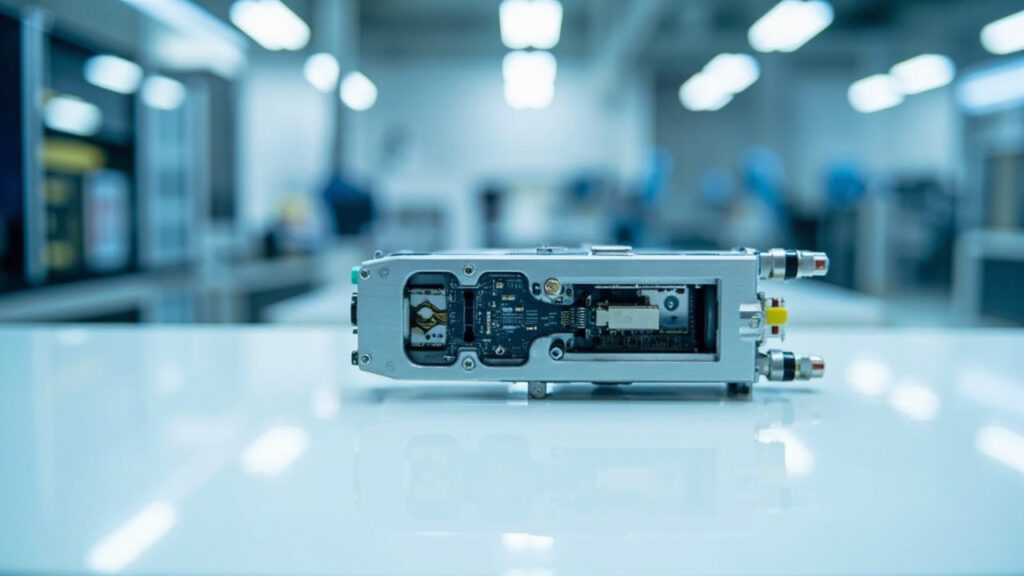
Electromechanical assemblies combine electronic components with mechanical parts, such as circuit boards within a metal enclosure. Their complexity arises from the need to precisely coordinate mechanical tolerances with electronic functionality, manage heat, vibration, and EMI, and ensure seamless integration of diverse materials and processes.
Why is it beneficial to choose a contract manufacturer with both mechanical and electronics capabilities?
Choosing a CM with integrated mechanical and electronics capabilities under one roof streamlines your supply chain by eliminating the need for multiple vendors. This reduces logistical overhead, improves communication, ensures coordinated quality control, and minimizes the risk of errors or delays that can occur when components are transferred between different facilities.
How does Design for Manufacturability (DFM) help with electromechanical assemblies?
DFM is crucial for electromechanical assemblies because it involves optimizing the product design for efficient, cost-effective, and reliable production. A CM offering DFM consultation can identify potential manufacturing challenges early, recommend material alternatives, refine tolerances, and suggest assembly sequence improvements, ultimately saving time and reducing costs.
What should I look for in a CM's quality control for these types of assemblies?
For electromechanical assemblies, look for a CM with robust in-process inspections, comprehensive functional and environmental testing capabilities, and full traceability of components and processes. A strong Quality Management System (QMS) and clear documentation are essential to ensure consistent product quality and reliability.
How can a CM help ensure supply chain security for my electromechanical components?
A capable CM will offer proactive supply chain management, including strong relationships with component suppliers and inventory programs like blanket orders. They should also have strategies in place to mitigate risks such as component obsolescence, lead time fluctuations, and geopolitical disruptions, ensuring production continuity for your critical assemblies.