Blog
Integrated PCB Assembly: SMT and Through-Hole Solutions
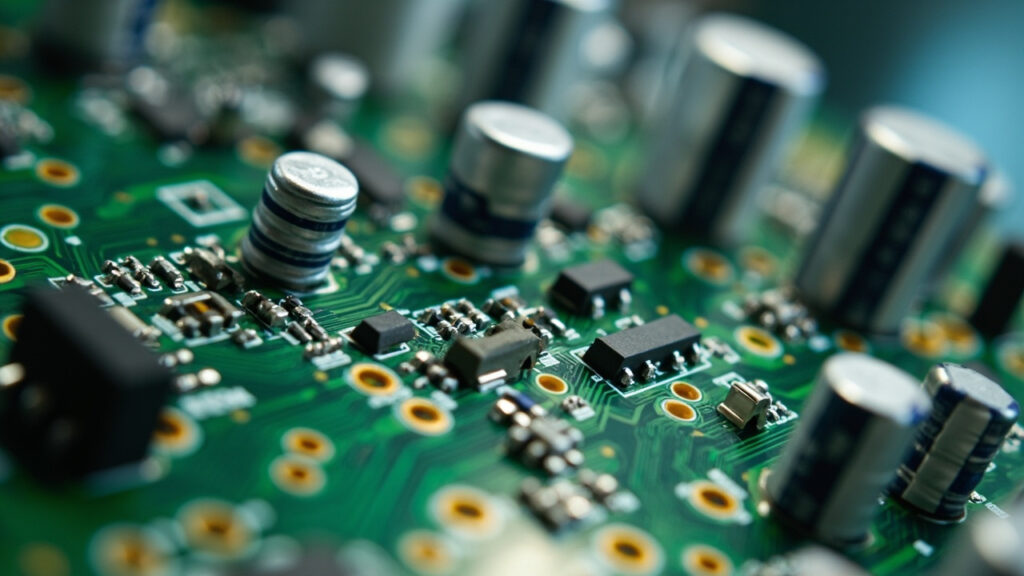
For original equipment manufacturers (OEMs) and hardware companies developing advanced electronic products, the ability to seamlessly integrate both Surface Mount Technology (SMT) and Through-Hole Technology (THT) components onto a single Printed Circuit Board (PCB) is often critical. This mixed-technology approach allows for optimal performance, miniaturization, and durability, leveraging the strengths of each component type. Finding a contract manufacturer with proven expertise in both SMT and through-hole assembly, under one roof, simplifies supply chains, reduces coordination overhead, and ensures consistent quality.
This guide explores the essential considerations for selecting a partner capable of handling your complex PCB assembly needs, focusing on the integrated capabilities required for modern electronic systems.
Why Integrated SMT and Through-Hole Assembly is Crucial
Modern electronics frequently demand a blend of component types. SMT components, known for their small footprint and high-density placement, are ideal for miniaturization and high-speed signal integrity. Through-hole components, conversely, offer superior mechanical strength, power handling capabilities, and are often preferred for connectors, larger capacitors, and components requiring robust physical attachment.
An integrated approach to PCB assembly means:
- Optimized Board Design: Engineers can select the best component technology for each function without being constrained by manufacturing limitations.
- Enhanced Performance: Combining technologies allows for circuits that are both compact and robust, handling diverse electrical and mechanical requirements.
- Improved Reliability: Through-hole components provide mechanical stability for high-stress areas, while SMT allows for dense, efficient circuitry.
- Cost-Effectiveness: A single manufacturing partner for both processes can lead to economies of scale, reduced logistics costs, and streamlined quality control.
- Faster Time-to-Market: Eliminating the need to coordinate between multiple vendors for different assembly stages accelerates the production cycle.
Key Capabilities to Look for in a PCB Assembly Partner
When evaluating contract manufacturers for mixed-technology PCB assembly, several critical capabilities distinguish a reliable partner:
1. Advanced SMT Assembly Lines
Look for manufacturers equipped with state-of-the-art SMT lines that can handle a wide range of component sizes and types, including:
- Fine-Pitch Components: Capability to place components with very small lead spacing (e.g., 0.4mm and below) accurately.
- Ball Grid Arrays (BGAs) and Quad Flat No-Lead (QFN) Packages: Expertise in precise placement and reflow soldering for these complex packages.
- Automated Optical Inspection (AOI): In-line AOI systems are essential for detecting defects such as missing components, incorrect polarity, and solder joint issues immediately after reflow.
- High-Volume Capacity: Scalable SMT lines that can accommodate both prototype runs and high-volume production without compromising quality or lead times.
2. Robust Through-Hole Assembly Processes
While often perceived as less complex than SMT, precise through-hole assembly is vital for product reliability. Key aspects include:
- Automated Insertion: For high-volume production, automated axial and radial component insertion machines ensure consistency and speed.
- Wave Soldering: Modern wave soldering equipment with precise temperature control and flux application is crucial for creating strong, reliable solder joints for THT components.
- Selective Soldering: For boards with sensitive SMT components adjacent to through-hole parts, selective soldering offers a controlled method to solder THT components without affecting nearby SMT parts.
- Manual Assembly Expertise: Skilled technicians are indispensable for placing odd-form components, connectors, and for final assembly stages requiring delicate handling.
3. Integrated Quality Control and Testing
A manufacturer's commitment to quality across both SMT and through-hole processes is paramount. This includes:
- Design for Manufacturability (DFM) Analysis: Early collaboration to optimize PCB layout for efficient assembly, minimizing potential issues with component placement, solderability, and testability for both SMT and THT.
- In-Circuit Testing (ICT): Comprehensive electrical testing to verify component presence, correct values, and proper circuit functionality.
- Functional Testing (FCT): Simulating the end-use environment to ensure the assembled PCB performs as designed.
- X-ray Inspection: Critical for inspecting solder joints under BGAs and other hidden connections.
- Environmental Testing: Capabilities for thermal cycling, vibration testing, and humidity testing to ensure long-term reliability.
4. Supply Chain Management and Component Sourcing
Effective supply chain management is critical for production continuity, especially in today's volatile market. Look for a partner who offers:
- Global Sourcing Network: Access to a wide range of component suppliers to mitigate risks and ensure competitive pricing.
- Inventory Management Programs: Options like blanket orders and consignment programs to secure critical components and manage inventory levels efficiently.
- Obsolescence Management: Proactive strategies to identify and manage end-of-life components, recommending suitable alternatives.
- Traceability: Robust systems for tracking components from procurement through assembly, ensuring full visibility and accountability.
Four Points Platinum: Your Partner for Integrated PCB Assembly
Four Points Platinum specializes in providing comprehensive, integrated mechanical and electronics contract manufacturing services, including advanced PCB assembly for both SMT and through-hole components. Located in the Austin metro area, we serve OEMs and hardware companies requiring precision and reliability for their complex electronic systems.
Our capabilities include:
- Full-Service PCB Assembly: From rapid prototyping to high-volume production, we handle boards with diverse component mixes.
- Advanced SMT Lines: Equipped for fine-pitch, BGA, and QFN placement with automated inspection.
- Through-Hole Expertise: Utilizing wave soldering, selective soldering, and skilled manual assembly for robust connections.
- Design-for-Manufacturability (DFM) Consultation: Our engineers work with your design team to optimize your PCB for efficient and reliable manufacturing, considering both SMT and THT requirements.
- Integrated Quality Assurance: Comprehensive testing protocols including AOI, ICT, and functional testing ensure every board meets your specifications.
- Supply Chain Security: Proactive component sourcing and inventory management programs to ensure production continuity.
- Single-Source Accountability: As an integrated manufacturer, we provide a single point of contact for both your electronics and mechanical assembly needs, streamlining project management and ensuring coordinated tolerances and fit for complete box builds.
By choosing Four Points Platinum, you gain a partner committed to delivering high-quality, reliable PCB assemblies that meet the rigorous demands of your applications.
Frequently Asked Questions
What is the difference between SMT and through-hole components in PCB assembly?
SMT (Surface Mount Technology) components are smaller and mounted directly onto the surface of the PCB, allowing for higher component density and miniaturization. Through-hole components have leads that pass through holes in the PCB and are soldered on the opposite side, offering greater mechanical strength and power handling, often used for larger or more robust parts like connectors.
Why would I need both SMT and through-hole components on the same PCB?
Many modern electronic designs require a combination of both technologies. SMT is ideal for compact, high-density digital and analog circuitry, while through-hole is often preferred for components that need to withstand physical stress, carry higher currents, or require robust connections, such as power connectors, large capacitors, or transformers. This mixed approach optimizes performance and reliability.
How does Four Points Platinum ensure quality for mixed-technology PCB assemblies?
We employ a multi-faceted quality assurance process. This includes Design-for-Manufacturability (DFM) analysis at the outset, in-line Automated Optical Inspection (AOI) for SMT, precise wave and selective soldering for through-hole components, and comprehensive post-assembly testing such as In-Circuit Testing (ICT) and Functional Testing (FCT) to ensure all components are correctly placed and the board performs to specification.
Can Four Points Platinum handle both prototyping and high-volume production for mixed-technology PCBs?
Yes, Four Points Platinum is equipped to support your project from initial rapid prototyping through to full-scale, high-volume production runs. Our flexible manufacturing lines and experienced team can adapt to varying production quantities while maintaining consistent quality and efficiency for both SMT and through-hole assembly.
What kind of industries benefit most from integrated SMT and through-hole PCB assembly?
Industries requiring robust, high-performance electronics often benefit significantly. This includes industrial automation, medical devices, telecommunications, aerospace, defense, and specialized computing. These sectors frequently need boards that are compact yet durable, capable of handling diverse electrical loads and operating in demanding environments.
Next Steps
If your project requires precision PCB assembly incorporating both SMT and through-hole components, Four Points Platinum offers the expertise and integrated capabilities to meet your needs. Contact us today to discuss your specific requirements and learn how our comprehensive manufacturing solutions can support your product development and production goals.