Blog
Integrated Box Build Assembly for Pneumatic and Hydraulic Manifolds
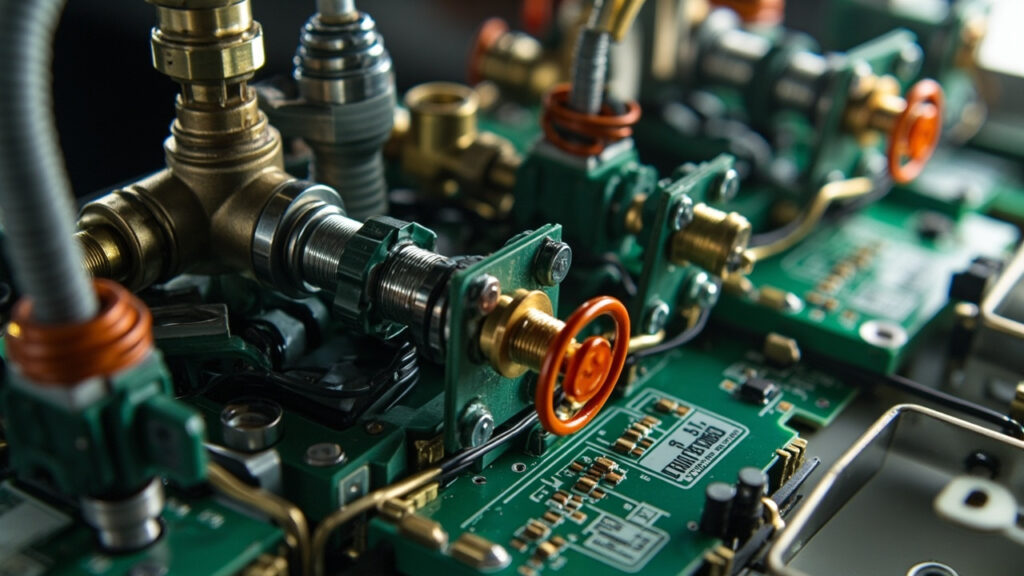
Yes, manufacturers exist that can build pneumatic or hydraulic manifolds as part of a larger OEM assembly, often referred to as a box build assembly. These integrated contract manufacturers specialize in combining both mechanical and electronic manufacturing processes under one roof, providing a single source for complex systems.
This approach streamlines production, reduces hand-offs, and improves overall accountability for the final product.
Key Takeaways
- Integrated contract manufacturers offer a single source for both mechanical and electronic components, including pneumatic and hydraulic manifolds within box build assemblies.
- Consolidating manufacturing reduces supply chain complexity, minimizes lead times, and ensures coordinated tolerances between diverse components.
- Design-for-manufacturability (DFM) consultation from a single partner optimizes the entire assembly for cost-effectiveness and production efficiency.
- A unified approach to quality control and change management across mechanical and electronic elements enhances product reliability and performance.
- OEMs benefit from blanket order programs and inventory readiness, ensuring production continuity and supply chain security for critical assemblies.
The complexity of modern OEM products often requires the integration of diverse technologies, from precision mechanical components like manifolds to sophisticated electronic controls. Traditionally, this meant managing multiple suppliers—one for mechanical parts, another for electronics, and perhaps a third for final assembly. However, an increasing number of OEMs are recognizing the benefits of partnering with integrated mechanical and electronics contract manufacturers for comprehensive box build assembly services.
What is a Box Build Assembly and Why Does it Matter for Manifolds?
A box build assembly encompasses the entire process of assembling a complete product, including all mechanical, electronic, and pneumatic/hydraulic components, wiring, sub-assemblies, and enclosures. For pneumatic or hydraulic manifolds, integrating them into a box build means that the manifold itself, along with its associated valves, sensors, tubing, and electronic control unit, are all assembled, tested, and often housed within a single enclosure by one supplier. This contrasts sharply with a fragmented approach where the manifold might be sourced from a machine shop, the PCBs from an EMS provider, and final assembly done in-house or by a third party.
The significance of this integrated approach for manifolds lies in the critical interplay between mechanical precision and electronic control. Pneumatic and hydraulic systems rely on precise fluid dynamics and often require sophisticated electronic feedback loops for accurate operation. When a single manufacturer handles both aspects, they can ensure that the mechanical tolerances of the manifold directly align with the requirements of the electronic sensors and actuators, leading to a more reliable and higher-performing final assembly.
How Do Integrated Manufacturers Handle Both Mechanical and Electronic Components?
Integrated manufacturers achieve this by maintaining diverse capabilities within their facilities. This typically includes advanced CNC machining and precision sheet metal fabrication for mechanical components, alongside advanced PCB assembly (SMT and through-hole) for electronics. The key is not just having the equipment, but also the engineering expertise to bridge the gap between these traditionally separate disciplines.
For instance, Four Points Platinum, based in Pflugerville, Texas, has been providing integrated mechanical and electronics manufacturing since 2009. They offer services ranging from CNC machining and fabrication for manifold bodies to PCB assembly for the control electronics, and then integrate these into full box builds. This single-source capability means that the entire assembly, from the raw material to the finished product, is managed under one roof, ensuring consistent quality and coordinated production schedules.
What are the Advantages of a Single Supplier for Manifold Box Builds?
Choosing a single supplier for integrated box build assemblies, especially those involving complex components like pneumatic or hydraulic manifolds, offers several distinct advantages over managing separate machine shops and EMS providers. These benefits span across supply chain management, quality control, engineering collaboration, and overall project efficiency.
| Aspect | Single Integrated Supplier | Separate Machine Shop & EMS |
|---|---|---|
| Supply Chain | One PO, one vendor, simplified logistics | Multiple POs, multiple vendors, complex logistics |
| Accountability | Single point of contact for entire assembly | Divided responsibility, potential blame shifting |
| Lead Time | Coordinated scheduling, reduced hand-off delays | Staggered schedules, increased hand-off delays |
| Quality Control | Unified inspection protocols, consistent standards | Varied quality standards, potential interface issues |
| DFM Feedback | Holistic design optimization across disciplines | Limited DFM for specific components only |
| Cost Management | Consolidated quoting, potential volume discounts | Separate quotes, less leverage for total assembly |
| Risk Management | Centralized issue resolution, proactive problem-solving | Decentralized issue resolution, reactive fixes |
The most significant advantage is the reduction in supply chain complexity. OEMs no longer need to manage multiple vendors, coordinate shipping between facilities, or reconcile differing quality standards. This consolidation leads to fewer administrative burdens and a more streamlined procurement process.
How Does Design for Manufacturability (DFM) Benefit Integrated Manifold Assemblies?
Design for Manufacturability (DFM) is a critical engineering practice that optimizes a product's design for efficient and cost-effective production. When applied to integrated manifold assemblies by a single supplier, DFM becomes even more powerful because it considers both mechanical and electronic aspects simultaneously. Instead of optimizing a manifold for machining and then separately optimizing a PCB for assembly, an integrated DFM approach looks at the entire system.
For example, a DFM review might identify opportunities to simplify the manifold's internal channels to reduce machining time while simultaneously ensuring that the mounting points for electronic sensors are easily accessible for automated placement during PCB assembly. This holistic perspective can prevent costly redesigns later in the production cycle and ensure that the final product meets performance specifications while remaining economical to produce. SME emphasizes that DFM is crucial for reducing manufacturing costs and improving product quality across various industries.
What Should Be Included in an RFQ for a Complete Manifold Box Build Assembly?
When requesting a quote for a complete box build assembly that includes pneumatic or hydraulic manifolds, providing comprehensive information is crucial for accurate pricing and efficient production. An incomplete RFQ can lead to delays, cost overruns, and products that don't meet specifications.
Here's a breakdown of essential elements to include:
- Detailed Bill of Materials (BOM): List all components, including mechanical parts (manifold body material, valves, fittings, seals), electronic components (PCBs, ICs, connectors, wires), and any off-the-shelf items. Specify part numbers, manufacturers, and approved alternates.
- CAD Models and Drawings: Provide 2D and 3D CAD files for all custom mechanical parts, including the manifold, enclosure, and any brackets. Include detailed assembly drawings with critical dimensions and tolerances.
- Schematics and PCB Layout Files: For electronic components, include complete schematics, Gerber files, and any necessary assembly instructions for the PCBs.
- Firmware/Software: If the assembly includes programmable electronics, specify the firmware or software requirements and provide any necessary code or programming instructions.
- Test Procedures: Outline all functional and environmental test requirements for the complete assembly and individual sub-assemblies. Specify pass/fail criteria and any required test fixtures.
- Quality Standards: State any required industry standards (e.g., IPC-A-610 for electronics, ISO 9001 for quality management) or specific customer quality requirements. IPC provides widely recognized standards for electronics manufacturing.
- Packaging and Labeling: Detail specific packaging requirements, including anti-static precautions, custom boxes, and labeling instructions.
- Volume and Delivery Schedule: Clearly state the required production volumes (prototype, low-volume, production) and desired delivery timelines, including any blanket order or inventory readiness programs.
- Special Instructions: Include any unique requirements such as specific surface finishes, plating, painting, or environmental considerations.
Providing this level of detail upfront allows the integrated manufacturer to provide a more accurate quote, identify potential DFM issues early, and establish a clear production plan.
Moving from Prototype to Production: Ensuring Continuity for Manifold Assemblies
The transition from a functional prototype to repeatable, high-quality production is a critical phase for any OEM product, especially those with complex integrated components like manifold box builds. An integrated manufacturer can significantly smooth this transition by maintaining continuity across all stages of development and production. This is particularly important for ensuring that the lessons learned during prototyping are effectively carried into full-scale manufacturing.
Four Points Platinum supports this continuum, offering services from rapid prototyping to full-scale production. This means that the same engineering team and manufacturing processes that built the initial prototype can be leveraged for subsequent low-volume and high-volume production runs. This continuity helps to eliminate the "knowledge gap" that often arises when transitioning between different suppliers for different stages of product development. More details on this efficient transition can be found at [Product Development: Prototype to Production with a Single Partner](/insights/blog/seamless-product-development-prototype-to-production-with-a-single-partner).
What are the Benefits of Blanket Orders and Inventory Programs for OEMs?
For OEMs requiring consistent supply and production continuity, blanket orders and inventory readiness programs offered by integrated manufacturers are invaluable. A blanket order is a long-term agreement between a buyer and a supplier to deliver goods or services at a predetermined price over a specified period. This commitment allows the manufacturer to plan production more effectively, often leading to better pricing and guaranteed capacity.
Inventory readiness programs go a step further, with the manufacturer holding a certain level of finished goods or critical components in stock, ready for immediate shipment as needed. This mitigates supply chain risks, especially for components with long lead times or fluctuating availability. For complex box build assemblies like those containing pneumatic or hydraulic manifolds, this ensures that production can continue uninterrupted, even in the face of unexpected demand spikes or supply chain disruptions. This proactive approach to inventory management is a cornerstone of supply chain security, as highlighted by NIST Manufacturing Extension Partnership.
How Does an Integrated Approach Impact Quality and Accountability?
Quality control and accountability are paramount in manufacturing, particularly for critical components like pneumatic and hydraulic manifolds where failure can have significant operational or safety implications. An integrated manufacturing approach centralizes these functions, leading to more robust quality assurance and a clearer chain of accountability.
When mechanical and electronic components are produced and assembled by separate entities, quality issues can become complex to diagnose. Was the manifold machined to spec? Was the PCB assembled correctly? Did the two components integrate properly?
With a single integrated supplier, there is one point of accountability for the entire box build. This means that quality checks are coordinated across all stages, from incoming material inspection for both metal and electronic components to final functional testing of the complete assembly. Documented workflows for quoting, scheduling, inspection, and change control further reinforce this unified approach, ensuring consistent quality throughout the production process.
What are the Challenges of Fragmented Manufacturing for Complex Assemblies?
Fragmented manufacturing, where different suppliers handle distinct parts of a complex assembly, introduces several challenges that can impact cost, quality, and lead time. These challenges are particularly pronounced for integrated systems like manifold box builds.
- Increased Hand-offs and Logistics: Each time a component or sub-assembly moves between suppliers, there's a hand-off point. Each hand-off is an opportunity for delays, damage, or miscommunication. Managing multiple shipping schedules and logistics adds significant administrative overhead.
- Inconsistent Quality Standards: Different suppliers may adhere to varying quality control standards and inspection protocols. This can lead to discrepancies between components that are designed to work together, potentially causing fitment issues or performance problems in the final assembly.
- Blame Shifting: If a problem arises in the final assembly, it can be difficult to pinpoint the root cause when multiple suppliers are involved. The mechanical supplier might blame the electronics, and vice versa, leading to delays in resolution and increased costs.
- Limited Design for Manufacturability (DFM): Each supplier typically provides DFM feedback only for their specific part of the assembly. This siloed approach misses opportunities for holistic optimization across the entire product, potentially leading to suboptimal designs or higher overall manufacturing costs.
- Extended Lead Times: The cumulative lead times from multiple suppliers, combined with the time required for inter-supplier logistics and potential rework, often result in significantly longer overall project timelines compared to a single-source approach.
These challenges underscore why OEMs are increasingly seeking integrated manufacturing partners who can manage the entire box build assembly process, from individual component fabrication to final product testing and delivery. For more insights on production for OEMs, visit [High-Mix, Low-to-Medium Volume Production for OEMs](/insights/blog/high-mix-low-to-medium-volume-production-for-oems).
What are the Typical Applications for Integrated Manifold Box Builds?
Integrated manifold box builds are crucial in a wide array of industries where precise fluid control and electronic integration are necessary. These applications often demand high reliability, compact designs, and robust performance in challenging environments.
- Industrial Automation: Robotics, machine tools, and process control systems frequently use integrated pneumatic or hydraulic manifolds for precise actuation and control of machinery. The box build includes the manifold, solenoid valves, pressure sensors, and the programmable logic controller (PLC) or embedded system that manages their operation.
- Medical Devices: Equipment such as diagnostic instruments, patient monitoring systems, and surgical tools often rely on miniature fluidic manifolds for precise reagent delivery or gas control, integrated with sensitive electronics for data acquisition and user interface.
- Aerospace and Defense: Aircraft hydraulic systems, missile guidance controls, and ground support equipment utilize robust manifolds integrated with electronic controllers for critical flight surfaces, landing gear, and weapon systems, where reliability and compact size are paramount.
- Energy Sector: Oil and gas exploration equipment, renewable energy systems (e.g., wind turbine pitch control), and power generation systems employ integrated hydraulic manifolds for heavy-duty actuation and control, often in harsh conditions.
- Semiconductor Manufacturing: High-purity gas and liquid delivery systems for wafer fabrication require extremely precise and clean manifolds, integrated with electronic flow controllers and sensors to maintain process integrity.
- Automotive Test Equipment: Test benches for engines, transmissions, and other vehicle components use integrated hydraulic and pneumatic manifolds to simulate operational conditions and gather performance data, all controlled by integrated electronics.
In each of these applications, the ability to have a single supplier manage the entire box build assembly, including the manifold, ensures that the complex interplay between mechanical and electronic systems is optimized for performance, reliability, and manufacturability. This is why companies like Dell, IBM, and 3M, which require high-reliability components for their products, often partner with integrated manufacturers.
Frequently Asked Questions
What is the primary benefit of using an integrated manufacturer for box build assemblies?
The primary benefit is single-point accountability and reduced supply chain complexity. An integrated manufacturer manages both mechanical and electronic production, streamlining communication, coordinating tolerances, and ensuring consistent quality across the entire assembly from a single source. This consolidation leads to more efficient project execution.
How does an integrated approach affect lead times for complex assemblies?
An integrated approach typically reduces overall lead times. By eliminating multiple hand-offs between separate suppliers and coordinating production schedules internally, an integrated manufacturer can optimize the entire manufacturing process, leading to faster delivery of complete box build assemblies. This efficiency is a key advantage for OEMs.
Can integrated manufacturers help with design optimization for pneumatic manifolds?
Yes, integrated manufacturers offer design-for-manufacturability (DFM) consultation that considers both mechanical and electronic aspects. They can advise on optimizing manifold designs for efficient machining and fabrication, while also ensuring effective integration with electronic controls and sensors. This holistic view improves product performance.
What kind of quality control is in place for integrated box build assemblies?
Integrated manufacturers implement unified quality control systems that span both mechanical and electronic production. This includes coordinated inspection protocols, consistent quality standards, and comprehensive functional testing of the complete assembly, ensuring high reliability and performance. This approach minimizes defects and rework.
Is it more cost-effective to use an integrated manufacturer for box builds?
While initial component costs might seem similar, an integrated manufacturer often provides greater overall cost-effectiveness. This is due to reduced administrative overhead, fewer logistical costs, minimized rework, and the benefits of holistic DFM, which can lower total cost of ownership. This leads to long-term savings.
Next Step
To discuss your specific requirements for integrated mechanical and electronics manufacturing, including complex box build assemblies with pneumatic or hydraulic manifolds, contact an integrated contract manufacturer for a detailed consultation and quote.