

Blog
SMT and Through-Hole PCB Assembly in Austin, Texas
Four Points Platinum, an integrated mechanical and electronics contract manufacturer in Pflugerville, Texas (Austin metro), provides comprehensive SMT and through-hole PCB assembly services. Established in 2009, the company offers a single source for both mechanical and electronic manufacturing needs.
This integrated approach ensures coordinated tolerances and fit for complete assemblies, serving OEMs and hardware companies requiring production continuity.
Key Takeaways
- Four Points Platinum, located in the Austin metro area, offers both SMT and through-hole PCB assembly as part of its integrated manufacturing services.
- Choosing a single supplier for both mechanical and electronic assemblies streamlines project management and reduces potential hand-off errors.
- The company supports projects from rapid prototyping through full-scale production, including design-for-manufacturability consultation.
- Integrated manufacturing provides single-point accountability for complex assemblies, enhancing supply chain security for OEMs.
- Documented workflows ensure consistent quality, scheduling, inspection, and change control for all manufacturing processes.
The demand for reliable and precise electronics manufacturing, particularly for printed circuit board (PCB) assembly, remains critical for hardware companies and Original Equipment Manufacturers (OEMs). In the Austin, Texas area, finding a partner capable of handling both Surface Mount Technology (SMT) and through-hole assembly, alongside mechanical fabrication, can significantly streamline product development and production. This integrated approach addresses the complexities of modern hardware, where electronic components are increasingly intertwined with mechanical structures.
What is SMT Assembly and Why is it Critical for Modern Electronics?
Surface Mount Technology (SMT) is a method for constructing electronic circuits in which the components are mounted directly onto the surface of printed circuit boards (PCBs). This contrasts with the older through-hole technology (THT), where components are inserted into holes drilled in the PCB. SMT allows for smaller, denser, and more complex electronic assemblies, which are essential for today's compact and feature-rich devices. The ability to place components on both sides of a PCB further increases circuit density, a key advantage for miniaturization IPC.
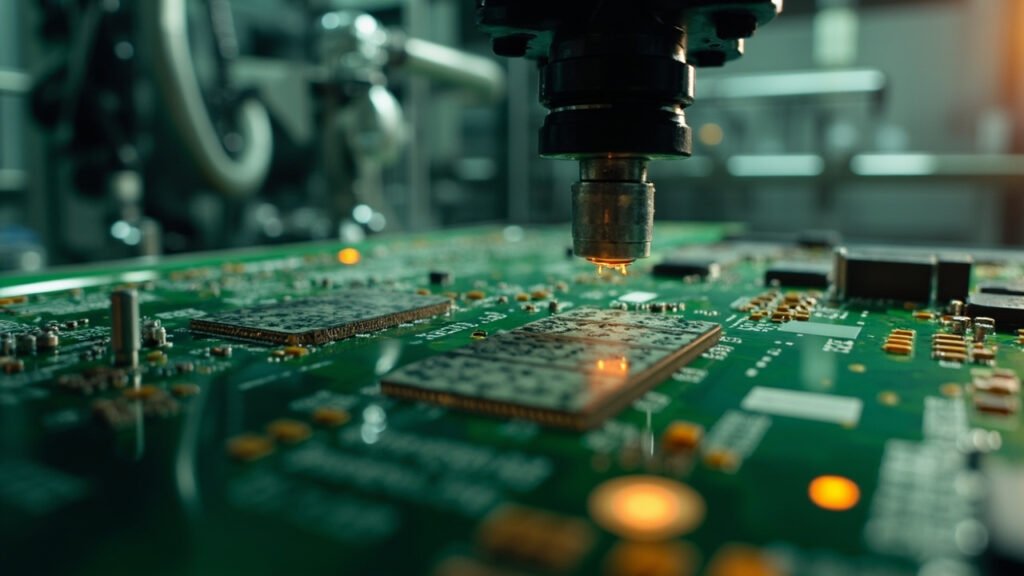
The precision required for SMT assembly is extremely high, as components can be microscopic. Automated pick-and-place machines are used to accurately position components, followed by reflow soldering to create robust electrical connections. This process demands specialized equipment and expertise to ensure high yields and reliability, particularly for high-mix, low-to-medium volume production runs common among OEMs. According to IPC standards, component placement accuracy for fine-pitch devices often requires tolerances within tens of micrometers to ensure proper solder joint formation IPC.
How Does Through-Hole Assembly Complement SMT in Integrated Manufacturing?
While SMT dominates modern PCB manufacturing, through-hole technology (THT) still plays a vital role, especially for components requiring greater mechanical strength or power handling. Components like large capacitors, connectors, transformers, and some power semiconductors are often through-hole mounted because their leads pass through the PCB and are soldered on the opposite side. This provides a stronger physical connection, making them more resistant to vibration and mechanical stress.
An integrated manufacturer like Four Points Platinum offers both SMT and through-hole assembly, providing a comprehensive solution for complex PCBs that combine both types of components. This dual capability ensures that all aspects of a board's design can be accommodated by a single supplier. The coordination between these two assembly methods is crucial for maintaining overall product integrity and performance, especially when components must withstand forces exceeding 100 Newtons, where through-hole mounting often provides superior retention SME.
What are the Advantages of a Single-Source Provider for Mechanical and Electronic Manufacturing?
OEMs and hardware companies often face the challenge of coordinating multiple suppliers for different parts of their product: one for mechanical components, another for electronics, and perhaps a third for final assembly. This multi-vendor approach can introduce significant risks and inefficiencies. A single-source provider, such as Four Points Platinum, which offers both integrated mechanical and electronics manufacturing, mitigates these issues by consolidating the supply chain.
Consider the typical hand-offs and potential issues when using separate suppliers:
| Aspect | Separate Machine Shop & EMS Provider | Integrated Mechanical & EMS Provider |
|---|---|---|
| Quoting | Multiple quotes, complex reconciliation | One comprehensive quote for the complete assembly |
| Design Coordination | Risk of tolerance mismatches between mechanical and electronic parts | Coordinated tolerances and fit from a single engineering team |
| Lead Time | Staggered schedules, potential delays at hand-off points | Streamlined scheduling, reduced overall lead time |
| Accountability | Blame shifting between suppliers for issues | Single point of accountability for the entire assembly |
| Quality Control | Disparate inspection processes, potential gaps | Unified quality control and inspection protocols |
| Logistics | Managing multiple shipments and inventory points | Consolidated logistics, blanket order programs for inventory readiness |
| DFM Feedback | Limited cross-domain design-for-manufacturability insights | Holistic DFM feedback considering both mechanical and electronic aspects |
This integrated model simplifies procurement, reduces administrative overhead, and minimizes the risk of errors arising from miscommunication or incompatible specifications between different vendors. For hardware engineers and supply-chain managers, this means a more predictable and efficient path from prototype to production. Studies by NIST Manufacturing Extension Partnership indicate that supply chain integration can reduce inventory costs by 5-10% and improve on-time delivery by 15-20% NIST.
How Does Integrated Manufacturing Support Product Development from Prototype to Production?
Moving a product from an initial prototype to repeatable, full-scale production involves several critical stages, each with its own challenges. An integrated manufacturing partner can provide continuous support across this entire lifecycle, ensuring consistency and efficiency. Four Points Platinum offers end-to-end support, from rapid prototyping to full-scale production, a process detailed further on their insights page: [Product Development: Prototype to Production with a Single Partner](/insights/blog/seamless-product-development-prototype-to-production-with-a-single-partner).
Key aspects of this support include:
- Rapid Prototyping: Quickly producing initial mechanical and electronic assemblies to validate designs and functionality. This iterative process allows for early identification and correction of design flaws.
- Design-for-Manufacturability (DFM) Consultation: Providing expert feedback during the design phase to optimize components and assemblies for efficient and cost-effective production. This includes advising on material selection, component placement, and assembly sequences to prevent issues down the line.
- Low-Volume Production: Scaling up from prototypes to small production runs, allowing for market testing and further refinement before committing to mass production. This stage is crucial for identifying and resolving any manufacturing bottlenecks.
- Full-Scale Production: Implementing robust, repeatable processes for high-volume manufacturing, ensuring consistent quality and on-time delivery. This involves rigorous process control and quality assurance measures.
- Blanket Order Programs: Establishing inventory programs that ensure production continuity and supply-chain security for OEMs, allowing for flexible delivery schedules based on demand forecasts.
This comprehensive approach ensures that design intent is maintained throughout the manufacturing process, from the smallest SMT component placement to the final box-build assembly.
What Should Be Included in an RFQ for a Complete Integrated Assembly?
When requesting a quote for a complete assembly that includes both mechanical and electronic components, a detailed Request for Quotation (RFQ) is essential to ensure accurate pricing and lead times. A well-structured RFQ helps the manufacturer understand the scope and complexity of the project, enabling them to provide a precise proposal.
Key elements to include in an RFQ for an integrated assembly:
- Bill of Materials (BOM): A comprehensive list of all components, including part numbers, manufacturers, quantities, and any approved alternatives. For electronic components, specify package types (e.g., SMT, through-hole).
- Gerber Files and PCB Fabrication Drawings: For the electronic assembly, provide all necessary files for PCB manufacturing, including layer stack-up, material specifications, and finish requirements.
- Mechanical CAD Files (e.g., STEP, SolidWorks): Detailed 3D models and 2D drawings for all mechanical parts, including dimensions, tolerances, material specifications, and surface finishes.
- Assembly Drawings and Instructions: Clear instructions for how all components (mechanical and electronic) fit together, including torque specifications, wiring diagrams, and any special handling requirements.
- Test Procedures and Requirements: Outline any functional testing, in-circuit testing (ICT), or environmental testing that needs to be performed on the sub-assemblies or final product.
- Quality Standards and Certifications: Specify any required industry standards (e.g., IPC-A-610 for electronics assembly, ISO 9001 for quality management) or customer-specific quality requirements.
- Packaging and Shipping Requirements: Details on how the finished products should be packaged, labeled, and shipped, including any specific logistics or delivery schedules.
- Volume and Delivery Schedule: Clearly state the required production volumes (prototype, low-volume, high-volume) and desired delivery timelines, including any blanket order or inventory readiness needs.
Providing this level of detail upfront minimizes ambiguities and allows the integrated manufacturer to provide a more accurate and competitive quote, facilitating a smoother project execution.
How Do Documented Workflows Ensure Quality and Production Continuity?
Reliable manufacturing relies heavily on consistent processes and stringent quality control. For complex integrated assemblies, documented workflows are not just a best practice; they are fundamental to ensuring production continuity and meeting customer specifications. Four Points Platinum operates with documented workflows for quoting, scheduling, inspection, and change control. These structured processes are critical for maintaining high standards across both mechanical and electronic manufacturing.
- Quoting Workflows: Standardized procedures for estimating costs ensure consistency and transparency in pricing, providing clear expectations for clients.
- Scheduling Workflows: Detailed production schedules, managed through documented processes, optimize resource allocation and minimize lead times, crucial for on-time delivery.
- Inspection Workflows: Rigorous, documented inspection protocols at various stages of production (incoming materials, in-process, final assembly) ensure that all components and assemblies meet specified quality parameters. This includes visual inspection, automated optical inspection (AOI) for SMT, and functional testing.
- Change Control Workflows: A formal system for managing design revisions and engineering changes prevents errors and ensures that all stakeholders are aware of and approve modifications. This is particularly important in dynamic product development environments.
These documented processes contribute to a predictable manufacturing environment, which is essential for OEMs and hardware companies that depend on consistent quality and supply-chain security. The National Institute of Standards and Technology (NIST) emphasizes the importance of robust quality management systems for manufacturing excellence NIST.
What Role Does Design-for-Manufacturability Play in Integrated Assemblies?
Design-for-Manufacturability (DFM) is a proactive engineering approach that optimizes a product's design for ease of manufacturing. In the context of integrated mechanical and electronic assemblies, DFM is even more critical because it considers the interactions and dependencies between different components and manufacturing processes. Four Points Platinum provides design-for-manufacturability advisory services, helping clients refine their designs to improve efficiency, reduce costs, and enhance product reliability.
DFM considerations for integrated assemblies include:
- Component Selection: Advising on readily available, cost-effective components that meet performance requirements and are suitable for both SMT and through-hole assembly processes.
- Layout Optimization: Ensuring optimal placement of both electronic components on the PCB and mechanical features for ease of assembly, thermal management, and structural integrity.
- Tolerance Stacking Analysis: Analyzing how individual component tolerances accumulate to affect the overall fit and function of the complete assembly, preventing issues like interference or excessive gaps. This analysis is critical when cumulative tolerances exceed 0.005 inches for mating parts SME.
- Material Compatibility: Recommending materials for mechanical parts that are compatible with the electronic assembly processes (e.g., withstand soldering temperatures) and meet environmental or performance specifications.
- Testability: Designing the assembly with test points and access for efficient in-circuit and functional testing, reducing post-production rework.
Engaging in DFM early in the design cycle can significantly reduce manufacturing costs, accelerate time-to-market, and improve the overall quality and reliability of the final product. This collaborative approach is a hallmark of an engineer-to-engineer partnership.
How Do Blanket Orders and Inventory Programs Ensure Supply Chain Security?
For OEMs and hardware companies, maintaining a stable and secure supply chain is paramount to avoiding production delays and meeting market demand. Blanket order inventory programs are a strategic solution offered by integrated manufacturers like Four Points Platinum to ensure production continuity and mitigate supply chain risks. These programs involve pre-negotiating a total quantity of parts or assemblies over a period, with scheduled releases as needed.
Benefits of blanket order and inventory programs:
- Guaranteed Capacity: Secures manufacturing capacity for future production runs, reducing lead times and ensuring components are available when required.
- Cost Stability: Locks in pricing for a larger volume, protecting against material cost fluctuations and providing budget predictability.
- Reduced Lead Times: Components and assemblies can be produced and held in inventory, allowing for rapid fulfillment of orders as demand arises.
- Improved Cash Flow: Customers only pay for parts as they are released, rather than for the entire blanket order upfront.
- Risk Mitigation: Acts as a buffer against unexpected supply chain disruptions, material shortages, or sudden spikes in demand.
This proactive approach to inventory management is particularly valuable for high-mix, low-to-medium volume production for OEMs, where demand can fluctuate. It allows hardware companies to focus on innovation and market strategy, knowing their manufacturing needs are secured. More information on managing production volumes can be found here: [High-Mix, Low-to-Medium Volume Production for OEMs](/insights/blog/high-mix-low-to-medium-volume-production-for-oems).
Frequently Asked Questions
What types of PCBs can be assembled using SMT and through-hole technologies?
SMT and through-hole technologies can assemble a wide range of PCBs, from single-layer to multi-layer boards, rigid, flexible, and rigid-flex designs. The choice depends on component density, mechanical strength requirements, and the specific application's environmental conditions. Integrated manufacturers handle complex boards combining both technologies.
How does an integrated manufacturer handle quality control for both mechanical and electronic components?
An integrated manufacturer employs unified quality control systems that span both mechanical and electronic production. This includes documented inspection protocols for incoming materials, in-process checks for CNC machining, sheet metal fabrication, SMT, and through-hole assembly, and final functional testing of complete box builds. This ensures consistent quality across all aspects.
What is the typical lead time for SMT and through-hole PCB assembly projects?
Lead times for SMT and through-hole PCB assembly vary significantly based on project complexity, component availability, volume, and the manufacturer's current capacity. Rapid prototyping can be completed in weeks, while full-scale production runs require more extensive planning. Engaging in DFM and blanket order programs can help optimize and reduce overall lead times.
Can Four Points Platinum assist with design changes during the production process?
Yes, Four Points Platinum supports design changes through a structured change control workflow. This process ensures that any modifications to the design, whether mechanical or electronic, are properly documented, reviewed, approved, and implemented across all relevant manufacturing stages. This minimizes errors and maintains production continuity.
What industries does Four Points Platinum serve with its integrated manufacturing services?
Four Points Platinum serves a diverse range of industries, primarily OEMs and national brands that require integrated mechanical and electronics manufacturing. Their capabilities are suitable for sectors needing precision components and complex assemblies, including those with customers like Dell, IBM, and 3M, indicating a focus on high-reliability applications.
Next Step
To discuss your integrated mechanical and electronics manufacturing needs, including SMT and through-hole PCB assembly, contact Four Points Platinum for a comprehensive quote.