

Blog
Integrated Electronics and Machining Contract Manufacturing Near Austin, TX
For OEMs and hardware companies seeking a contract manufacturer near Austin, TX, Four Points Platinum provides integrated mechanical and electronics manufacturing services.
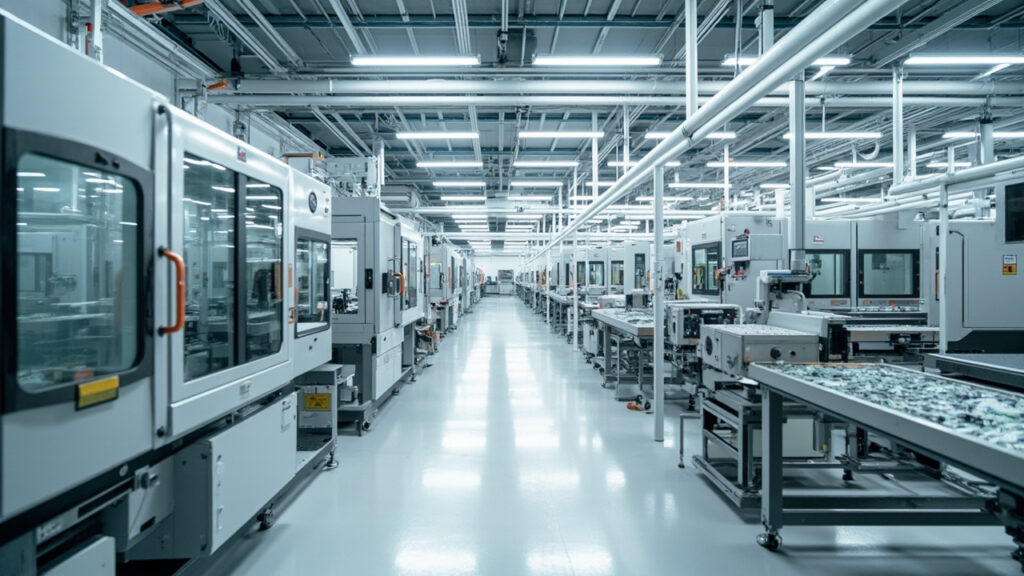
Located in Pflugerville, Texas, the company offers a single source for CNC machining, precision sheet metal, PCB assembly, and full box-builds, streamlining the production process from prototype to final assembly.
Key Takeaways
- Four Points Platinum, based in Pflugerville, TX, offers integrated mechanical and electronics contract manufacturing since 2009.
- Services include CNC machining, sheet metal fabrication, PCB assembly (SMT and through-hole), and complete box-builds under one roof.
- The integrated approach provides a single point of accountability, coordinated tolerances, and design-for-manufacturability feedback for complex assemblies.
- Support spans rapid prototyping to full-scale production, with options for blanket orders and inventory readiness programs.
- Customers benefit from streamlined workflows, reduced hand-offs, and supply chain security for critical hardware components.
The demand for complex electronic and mechanical assemblies requires a manufacturing partner capable of handling both disciplines with precision and efficiency. OEMs often face challenges coordinating multiple suppliers for different components, leading to potential delays, communication breakdowns, and increased costs. An integrated contract manufacturer can mitigate these risks by providing a unified approach to production.
Why Choose an Integrated Contract Manufacturer for Electronics and Machining?
Choosing a single integrated contract manufacturer for both electronics and mechanical components simplifies the supply chain and reduces project complexity. This approach eliminates the need for multiple vendors, separate quotes, and the logistical challenges of coordinating different production schedules and quality control processes. A unified supplier ensures that mechanical and electronic components are designed and manufactured to fit together precisely, reducing assembly issues and rework.
Four Points Platinum, established in 2009 in Pflugerville, Texas, offers this integrated capability. They provide a single source for mechanical manufacturing, including CNC machining, fabrication, and box builds, alongside electronics manufacturing, such as PCB assembly and surface mount technology (SMT). This comprehensive service model supports end-to-end product development, from rapid prototyping to full-scale production.
What Services Does an Integrated Manufacturer Offer for OEMs?
An integrated contract manufacturer provides a broad spectrum of services designed to support the entire product lifecycle of complex hardware. These services typically encompass both the mechanical and electronic aspects of an assembly, ensuring a cohesive manufacturing process. The goal is to deliver a complete, tested product with minimal external coordination required from the OEM.
Four Points Platinum offers a range of core capabilities:
- CNC Machining and Multi-Axis Milling: Precision machining of components from various materials.
- Precision Sheet Metal Fabrication: Forming and shaping metal parts to exact specifications.
- PCB Assembly and SMT Component Population: Populating printed circuit boards with surface mount and through-hole components.
- Full Box-Build Assembly: Integrating all mechanical and electronic subassemblies into a complete product.
- Design-for-Manufacturability (DFM) Advisory: Providing expert feedback during the design phase to optimize for production efficiency and cost-effectiveness.
- Blanket-Order Inventory Programs: Ensuring continuous supply and mitigating risks associated with component shortages.
These services are critical for OEMs that require consistent quality and reliable delivery for their products. The ability to manage both mechanical and electronic aspects under one roof means that critical interfaces and tolerances are coordinated from the outset, reducing potential issues during final assembly.
How Does Integrated Manufacturing Improve Supply Chain Security and Continuity?
Supply chain security and continuity are paramount for OEMs, especially in an environment prone to disruptions. Relying on a single, integrated contract manufacturer significantly enhances these aspects by consolidating points of contact and accountability. When mechanical and electronic components are sourced and assembled by the same partner, the risk of delays due to mismatches or communication gaps between different suppliers is greatly reduced.
An integrated approach means that component procurement, manufacturing schedules, and quality control are centrally managed. This allows for better visibility into the production process and quicker responses to potential issues. For instance, if a design change impacts both mechanical enclosures and PCB layouts, a single partner can coordinate these adjustments simultaneously, preventing cascading delays.
Furthermore, integrated manufacturers like Four Points Platinum offer blanket-order inventory programs. These programs allow OEMs to secure necessary components and production capacity in advance, ensuring that materials are available when needed and production can continue uninterrupted. This proactive approach helps buffer against market volatility and unforeseen supply chain challenges, providing a critical layer of security for continuous production. NIST Manufacturing Extension Partnership emphasizes the importance of robust supply chain management for manufacturing resilience.
What Are the Advantages of a Single Supplier for Complete Assemblies?
The advantages of using a single supplier for complete mechanical and electronic assemblies are numerous, impacting efficiency, cost, and quality. Consolidating manufacturing with one partner streamlines communication, reduces administrative overhead, and minimizes the potential for errors that can arise from multiple hand-offs between different vendors. This unified approach is particularly beneficial for complex products where mechanical and electronic components are tightly integrated.
One of the primary benefits is a single point of accountability. Instead of managing separate relationships with a machine shop and an electronics manufacturing services (EMS) provider, OEMs interact with one entity responsible for the entire build. This simplifies problem resolution and ensures consistent quality control across all components.
| Feature | Single Integrated Supplier | Separate Machine Shop & EMS Provider |
|---|---|---|
| Accountability | Single point for entire assembly | Multiple points, potential for blame-shifting |
| Communication | Streamlined, one contact for all issues | Complex, requires coordination between multiple vendors |
| Lead Time | Often reduced due to coordinated internal processes | Can be extended due to hand-offs and scheduling conflicts |
| Tolerances | Coordinated across mechanical and electronic interfaces | Risk of discrepancies between different suppliers |
| DFM Feedback | Holistic, considers both mechanical and electronic aspects | Fragmented, may not account for interdependencies |
| Cost Management | Consolidated quoting, potential for volume discounts | Separate quotes, higher administrative costs |
| Quality Control | Unified inspection and testing protocols | Varied standards and processes across different suppliers |
This table illustrates how a single integrated supplier like Four Points Platinum offers a more cohesive and efficient manufacturing solution, particularly for OEMs requiring high-mix, low-to-medium volume production. [Four Points Platinum: High-Mix, Low-to-Medium Volume Production for OEMs](/insights/blog/high-mix-low-to-medium-volume-production-for-oems) further details these benefits.
How Does Design-for-Manufacturability (DFM) Impact Project Success?
Design-for-Manufacturability (DFM) is a critical process that involves optimizing a product's design to facilitate efficient, cost-effective, and high-quality manufacturing. Engaging in DFM early in the product development cycle can significantly impact project success by identifying and resolving potential manufacturing challenges before production begins. This proactive approach minimizes costly redesigns, reduces material waste, and accelerates time to market.
An integrated contract manufacturer, with expertise in both mechanical and electronic processes, can provide comprehensive DFM feedback. This holistic perspective ensures that design decisions consider the implications for both component types, preventing issues where, for example, a mechanical enclosure might complicate PCB assembly or vice versa.
Key aspects of DFM provided by an integrated partner include:
- Material Selection Guidance: Advising on materials that meet performance requirements while being cost-effective and manufacturable.
- Tolerance Analysis: Ensuring that specified tolerances are achievable and compatible across different components, preventing fitment issues.
- Assembly Optimization: Recommending design changes that simplify the assembly process, reducing labor costs and potential for errors.
- Component Standardization: Suggesting standard components where possible to reduce costs and improve supply chain reliability.
- Process Efficiency: Identifying opportunities to streamline manufacturing steps, such as optimizing tool paths for CNC machining or panelization for PCB assembly.
By integrating DFM into the development process, OEMs can achieve a more robust and manufacturable product. This collaboration between the OEM's design team and the manufacturer's engineering team is essential for moving from prototype to repeatable, high-volume production efficiently. SME provides extensive resources on the principles and benefits of DFM in modern manufacturing.
What to Include in an RFQ for a Complete Assembly?
When requesting a quote for a complete mechanical and electronic assembly, providing comprehensive and precise information is crucial for receiving accurate and competitive bids. A well-structured Request for Quote (RFQ) enables potential contract manufacturers to fully understand the project scope, technical requirements, and expected deliverables. Incomplete or ambiguous RFQs can lead to delays, inaccurate pricing, and ultimately, a product that does not meet expectations.
For a complete assembly, the RFQ should detail both the mechanical and electronic aspects, emphasizing the integration required. This includes specifications for individual components as well as the final assembled product.
Essential elements to include in an RFQ for a complete assembly:
- Detailed Bill of Materials (BOM): List all components, including part numbers, manufacturers, and quantities. Specify if any components are customer-supplied.
- Mechanical Drawings: Provide CAD files (e.g., SolidWorks, STEP, IGES) for all mechanical parts, including enclosures, brackets, and custom components. Include material specifications, finishes, and critical tolerances.
- PCB Design Files: Include Gerber files, drill files, assembly drawings, and netlists for all printed circuit boards. Specify board material, layer count, and finish.
- Assembly Instructions: Provide step-by-step instructions for the final box-build, including any specific torque requirements, wiring diagrams, and testing procedures.
- Test Specifications: Outline functional test requirements, environmental testing, and any specific test fixtures needed.
- Quality Requirements: Specify relevant industry standards (e.g., IPC for electronics assembly, ISO for quality management) and any specific inspection criteria.
- Packaging and Shipping Instructions: Detail how the finished products should be packaged, labeled, and shipped.
- Project Volume and Schedule: Indicate anticipated production volumes (prototype, low-volume, high-volume) and desired delivery timelines.
- Contact Information: Provide clear contact details for technical and commercial inquiries.
A thorough RFQ allows integrated manufacturers like Four Points Platinum to provide a single, comprehensive quote that covers all aspects of the assembly, from individual component fabrication to final testing and packaging. This clarity helps ensure a smooth transition from quoting to production.
How Does a Single Partner Facilitate Product Development from Prototype to Production?
Transitioning a product from the prototyping phase to full-scale production can be a complex and challenging process, often fraught with potential pitfalls. A single, integrated manufacturing partner can significantly streamline this journey, ensuring efficient product development and reducing the risks associated with scaling up production. This continuity is vital for maintaining design intent, quality standards, and production efficiency across different stages.
When an OEM works with one partner from the initial rapid prototyping stages through low-volume and ultimately high-volume production, several benefits emerge:
- Consistent Knowledge Transfer: The manufacturing team gains deep familiarity with the product's design, requirements, and challenges from the very beginning. This institutional knowledge prevents information loss and ensures that lessons learned during prototyping are applied to production.
- Coordinated Design Iterations: Any design changes or improvements identified during prototyping can be efficiently implemented across both mechanical and electronic components by the same engineering team. This avoids the need to re-educate multiple suppliers.
- Optimized Processes: The manufacturer can refine production processes, tooling, and test fixtures as the product evolves, ensuring that the transition to higher volumes is smooth and cost-effective.
- Single-Point Accountability: The OEM maintains a single point of contact and accountability throughout the entire development cycle, simplifying communication and problem-solving.
Four Points Platinum offers this product development pathway, supporting OEMs from rapid prototyping to full-scale production. This integrated approach, detailed further in [Four Points Platinum: Product Development: Prototype to Production with a Single Partner](/insights/blog/seamless-product-development-prototype-to-production-with-a-single-partner), ensures that the journey from concept to market is as efficient and reliable as possible. The company's documented workflows for quoting, scheduling, inspection, and change control further support this continuity, providing transparency and control at every stage.
Frequently Asked Questions
What is an integrated mechanical and electronics contract manufacturer?
An integrated mechanical and electronics contract manufacturer is a single company that provides both mechanical fabrication (like CNC machining and sheet metal) and electronics assembly (like PCB assembly) under one roof. This approach streamlines the manufacturing process for complex products requiring both types of components, offering a unified solution from design to final assembly.
Where is Four Points Platinum located?
Four Points Platinum is located in Pflugerville, Texas, which is part of the greater Austin metropolitan area. The company has been in business since 2009, serving OEMs and hardware companies with integrated manufacturing solutions for their mechanical and electronic assembly needs.
What types of products can Four Points Platinum build?
Four Points Platinum can build a wide range of integrated mechanical and electronic assemblies, from rapid prototypes to full production runs. This includes products requiring precision CNC machining, sheet metal fabrication, PCB assembly (SMT and through-hole), and complete box-build integration for various industries.
Does Four Points Platinum offer design-for-manufacturability services?
Yes, Four Points Platinum provides design-for-manufacturability (DFM) advisory services. Their engineers collaborate with OEM design teams to optimize product designs for efficient and cost-effective production. This includes considering both mechanical and electronic aspects to ensure optimal integration and manufacturability, leading to a more robust final product.
What are the benefits of blanket orders for OEMs?
Blanket orders and inventory readiness programs offer significant benefits to OEMs, including enhanced supply chain security and production continuity. These programs allow OEMs to secure production capacity and component inventory in advance, mitigating risks associated with lead time fluctuations and material shortages, ensuring consistent product availability.
Contact Four Points Platinum today to discuss your integrated mechanical and electronics manufacturing requirements.