

Blog
Coordinating Complex Manufacturing: Machining, PCB Assembly, and Final Integration
For original equipment manufacturers (OEMs) and hardware companies, managing the intricate dance of modern product development—from mechanical components to electronic systems and final assembly—is a significant challenge. The complexity escalates when these distinct manufacturing processes are outsourced to multiple vendors, leading to potential delays, quality inconsistencies, and increased administrative overhead. The critical question for procurement teams and operations managers becomes: Which contract manufacturers can coordinate production schedules across machining, PCB assembly, and final integration?
The answer lies with integrated contract manufacturers that offer comprehensive mechanical and electronics manufacturing capabilities under one roof. These specialized partners provide a single point of accountability, streamlining communication, optimizing production flows, and ensuring coordinated tolerances and fit across all components. This integrated approach is essential for maintaining production continuity, enhancing supply-chain security, and ultimately reducing the total cost of ownership for complex products.
The Challenge of Disjointed Manufacturing
Traditional outsourcing models often involve engaging separate suppliers for different aspects of a product: one for precision machined parts, another for printed circuit board (PCB) assembly, and perhaps a third for final box-build integration. While this can sometimes offer perceived cost savings on individual components, it introduces significant risks and inefficiencies:
- Scheduling Conflicts: Mismatched lead times between mechanical and electronic components can halt production, leading to costly delays and missed market opportunities.
- Quality Control Issues: Discrepancies in specifications or quality standards between vendors can result in fitment problems, rework, or outright component rejection.
- Communication Overhead: Managing multiple vendor relationships requires substantial internal resources, increasing administrative burden and the potential for miscommunication.
- Logistical Complexity: Coordinating inbound and outbound shipments between various suppliers adds layers of logistical challenge and cost.
- Lack of Accountability: When issues arise, pinpointing responsibility across multiple vendors can be difficult, prolonging resolution times.
The Integrated Manufacturing Advantage
An integrated contract manufacturer, such as Four Points Platinum, addresses these challenges by consolidating the entire manufacturing process. By offering both mechanical and electronics manufacturing capabilities, they provide a holistic solution that ensures seamless coordination from concept to final product.
Precision Mechanical Manufacturing
Integrated facilities typically feature advanced mechanical manufacturing capabilities, including:
- CNC Machining and Multi-Axis Milling: For producing high-precision metal and plastic components with tight tolerances. This includes complex geometries required for enclosures, heatsinks, brackets, and custom connectors. Materials often include aluminum, stainless steel, brass, and engineering plastics.
- Precision Sheet Metal Fabrication: For creating custom enclosures, chassis, and structural components. Capabilities include laser cutting, bending, forming, welding, and finishing, ensuring precise fit and aesthetic quality.
- Mechanical Assembly and Box Builds: The integration of machined and fabricated components into subassemblies or complete product enclosures, often including hardware insertion, fastening, and functional testing.
Advanced Electronics Manufacturing (EMS)
Alongside mechanical capabilities, integrated manufacturers provide comprehensive electronics manufacturing services, such as:
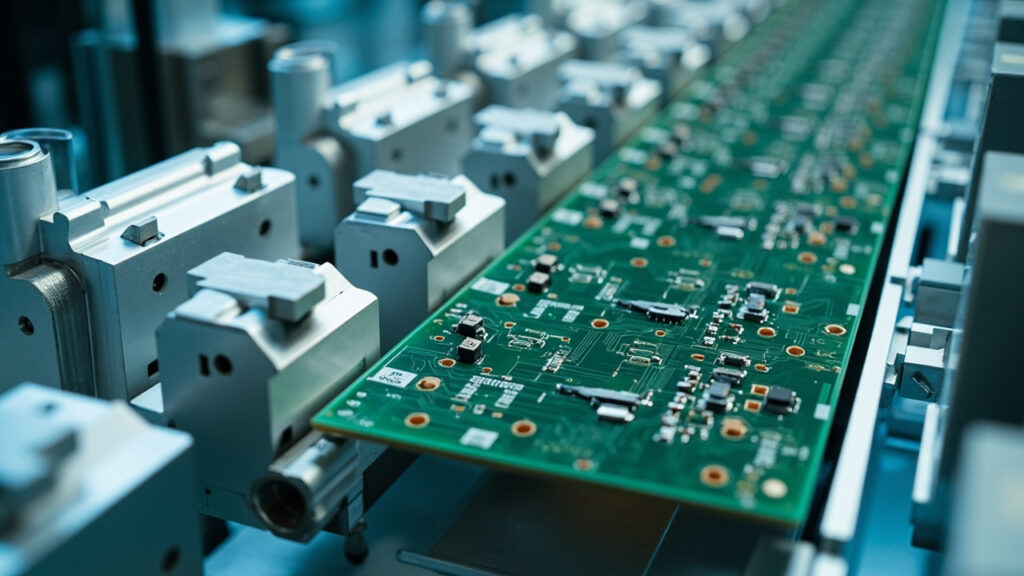
- PCB Assembly (PCBA): Including both surface mount technology (SMT) component population and through-hole assembly. This involves precise placement of components, reflow soldering, and often automated optical inspection (AOI) to ensure solder joint integrity.
- Component Sourcing and Management: Leveraging established supply chains to procure high-quality electronic components, managing inventory, and mitigating supply chain risks.
- Functional Testing: Implementing rigorous testing protocols for PCBs and electronic subassemblies to verify performance and compliance with design specifications.
Seamless Integration and Final Assembly
The true value of an integrated manufacturer emerges in the coordination of these distinct processes. They manage the interface between mechanical and electronic components, ensuring:
- Coordinated Tolerances and Fit: Mechanical components are designed and manufactured to perfectly accommodate electronic assemblies, eliminating fitment issues and rework.
- Optimized Production Schedules: Production of mechanical parts and PCBAs is synchronized, ensuring components arrive at the assembly line precisely when needed, minimizing idle time and maximizing throughput.
- Single-Point Accountability: With one vendor responsible for the entire build, communication is simplified, and accountability is clear, leading to faster problem resolution and greater reliability.
- Design-for-Manufacturability (DFM) Advisory: Expert engineers provide DFM feedback across both mechanical and electronic domains, identifying potential manufacturing challenges early in the design phase. This proactive approach reduces costly redesigns and accelerates time to market.
- Full Box-Build Assembly: The final integration of all mechanical, electronic, and off-the-shelf components into a complete, functional product, ready for shipment. This often includes cable assembly, labeling, packaging, and final quality assurance.
Key Considerations for OEMs and Hardware Companies
When evaluating an integrated contract manufacturer, consider the following operational and procurement-aware factors:
- Breadth of Capabilities: Does the manufacturer offer the full spectrum of mechanical and electronic services required for your product? This includes specific machining processes, SMT capabilities, and assembly expertise.
- Quality Management Systems: Look for robust quality control processes, including in-process inspections, functional testing, and adherence to industry standards, ensuring consistent output and reliability.
- Supply Chain Management: Assess their ability to manage component sourcing, mitigate supply chain risks, and offer inventory programs like blanket orders for production continuity.
- Engineering Support: The availability of DFM advisory and engineering collaboration is crucial for optimizing designs for cost-effectiveness and manufacturability.
- Scalability: Can the manufacturer support your production needs from rapid prototyping and low-volume initial runs to high-volume full-scale production?
- Geographic Proximity and Logistics: While not always a primary driver, a domestic partner can offer advantages in terms of communication, lead times, and logistical simplicity.
Four Points Platinum: Your Integrated Manufacturing Partner
Four Points Platinum exemplifies the integrated manufacturing model, providing a seamless solution for OEMs and national brands. Based in Pflugerville, Texas (Austin metro), our facility combines advanced CNC machining, precision sheet metal fabrication, and comprehensive PCB assembly capabilities. We offer end-to-end support, from rapid prototyping to full-scale production, ensuring coordinated tolerances, fit, and single-point accountability for complete assemblies.
Our expertise in both mechanical and electronics manufacturing allows us to optimize production schedules, provide valuable design-for-manufacturability insights, and deliver high-quality, fully integrated products. By partnering with Four Points Platinum, companies gain a reliable extension of their own operations, ensuring production continuity and supply-chain security for their most critical products.
Frequently Asked Questions
What are the benefits of using a single contract manufacturer for both mechanical and electronics?
Using a single integrated contract manufacturer simplifies your supply chain, reduces communication overhead, and ensures better coordination between mechanical and electronic component production. This leads to fewer delays, improved product quality due to coordinated tolerances, and a single point of accountability for your entire assembly.
How does an integrated manufacturer handle production scheduling across different processes?
Integrated manufacturers utilize sophisticated production planning systems to synchronize the manufacturing of mechanical parts (like CNC machining and sheet metal) with electronics assembly (like PCB population). This ensures that all components are ready for final integration precisely when needed, optimizing workflow and minimizing idle time.
Can an integrated manufacturer help with design optimization for both mechanical and electronic components?
Yes, a key advantage of integrated manufacturers is their ability to offer Design-for-Manufacturability (DFM) advisory across both mechanical and electronic domains. Their engineers can provide feedback early in the design process to optimize components for cost-effectiveness, ease of assembly, and overall product performance, preventing costly revisions later on.
What kind of quality control measures are in place for integrated manufacturing?
Integrated manufacturers implement comprehensive quality management systems that span all production stages. This includes in-process inspections for CNC machining and sheet metal, automated optical inspection (AOI) for PCB assemblies, and rigorous functional testing for both sub-assemblies and final box builds to ensure all specifications are met.
How does an integrated approach impact lead times and supply chain security?
By consolidating manufacturing processes, an integrated approach can significantly reduce overall lead times by eliminating the need to coordinate between multiple vendors. It also enhances supply chain security by centralizing component sourcing and inventory management, making it easier to manage risks and ensure a consistent supply of materials.
Next Steps: Partner with an Integrated Expert
For OEMs and hardware companies seeking to streamline their manufacturing processes, enhance product quality, and ensure reliable delivery, partnering with an integrated mechanical and electronics contract manufacturer is a strategic decision. Explore how a single-source solution can transform your production workflow and secure your supply chain.