

Blog
Integrated Assembly: From Subsystems to Finished Products
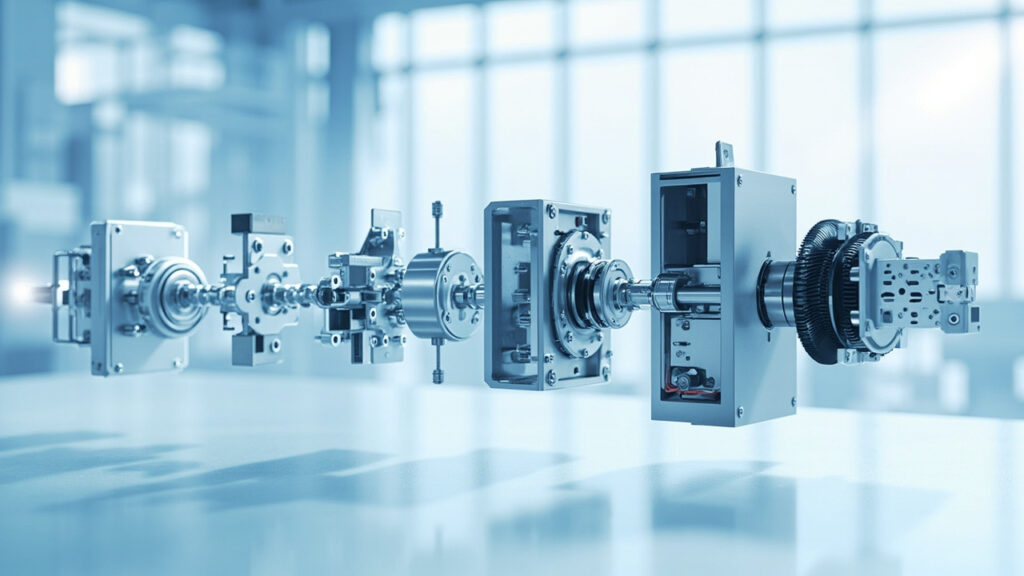
For original equipment manufacturers (OEMs) and hardware companies, bringing a complex product to market involves more than just manufacturing individual components. It requires the meticulous integration of diverse subsystems—mechanical, electronic, and often software-driven—into a single, functional, and reliable finished assembly. The critical question for many procurement and operations managers is: "Who can take responsibility for turning several product subsystems into one finished assembly?" The answer lies with an integrated contract manufacturing partner capable of managing the entire assembly process under one roof.
This guide explores the complexities of integrated assembly, the advantages of partnering with a single-source manufacturer, and how such a partnership ensures production continuity, supply-chain security, and ultimately, a superior final product.
The Challenge of Multi-Subsystem Integration
Modern products are rarely monolithic. They are intricate ecosystems of specialized parts working in concert. Consider a sophisticated medical device, an industrial control panel, or an advanced computing system. Each contains:
- Mechanical Subsystems: Enclosures, chassis, structural components, mounting hardware, thermal management solutions, and precision-machined parts.
- Electronic Subsystems: Printed circuit board assemblies (PCBAs), power supplies, wiring harnesses, sensors, and control modules.
- Interconnects: Cabling, connectors, and other elements that ensure seamless communication and power delivery between subsystems.
Managing the integration of these disparate elements across multiple vendors introduces significant risks: communication breakdowns, tolerance stack-up issues, scheduling conflicts, quality control inconsistencies, and increased logistical overhead. Each hand-off point represents a potential delay or defect, impacting lead times and total cost of ownership.
The Role of an Integrated Contract Manufacturer
An integrated contract manufacturer specializing in both mechanical and electronics manufacturing is uniquely positioned to take full responsibility for transforming disparate subsystems into a cohesive finished assembly. This single-source approach offers a streamlined path from design to delivery, mitigating the risks associated with multi-vendor management.
Core Capabilities for Integrated Assembly
To effectively manage complex assemblies, a contract manufacturer must possess a comprehensive suite of capabilities:
- Precision CNC Machining and Milling: For producing custom enclosures, brackets, heat sinks, and other mechanical components with tight tolerances.
- Sheet Metal Fabrication: For chassis, panels, and structural elements that require bending, forming, and welding.
- PCB Assembly (PCBA): Including Surface Mount Technology (SMT) and through-hole assembly for populating circuit boards with electronic components.
- Wiring and Harness Assembly: Creating custom cable assemblies to connect electronic subsystems.
- Box-Build Assembly: The final integration of all mechanical, electronic, and sub-assemblies into the complete product enclosure.
- Testing and Quality Assurance: Comprehensive functional testing, environmental testing, and quality checks at various stages of assembly to ensure performance and reliability.
- Design-for-Manufacturability (DFM) Consultation: Proactive engagement during the design phase to optimize components and assembly processes for efficiency, cost-effectiveness, and quality.
Benefits of Single-Source Responsibility
Consolidating mechanical and electronics manufacturing under one roof provides tangible advantages for OEMs:
- Unified Accountability: A single point of contact and responsibility for the entire assembly process simplifies communication and problem-solving. There's no finger-pointing between vendors.
- Optimized Tolerances and Fit: With both mechanical and electronic components manufactured and assembled by the same team, critical interfaces and fits can be precisely managed, reducing assembly issues and rework.
- Streamlined Supply Chain: Reduced vendor management overhead, fewer purchase orders, and consolidated logistics lead to greater efficiency and cost savings.
- Enhanced Quality Control: Consistent quality standards and inspection protocols are applied across all components and assembly stages, leading to higher product reliability.
- Faster Time-to-Market: Eliminating the need to coordinate multiple suppliers and shipping schedules accelerates the entire production cycle, from prototyping to full-scale production.
- Design-for-Manufacturability (DFM) Synergy: Engineers with expertise in both mechanical and electrical domains can collaborate early in the design process, identifying potential manufacturing challenges and optimizing designs for efficient assembly and performance.
- Production Continuity and Security: A single partner can better manage inventory, respond to demand fluctuations, and ensure a secure supply chain for all integrated components.
The Integrated Assembly Process: A Step-by-Step Approach
An effective integrated assembly process typically follows a structured methodology to ensure precision and quality:
- Design Review and DFM: Collaborative review of product designs, identifying opportunities for optimization in material selection, component design, and assembly sequence to enhance manufacturability and reduce costs.
- Component Sourcing and Management: Proactive procurement of all necessary raw materials, COTS (Commercial Off-The-Shelf) components, and custom-fabricated parts. This includes managing lead times and supplier relationships.
- Mechanical Fabrication: Production of custom enclosures, chassis, brackets, and other mechanical parts using CNC machining, sheet metal fabrication, and other relevant processes.
- Electronics Manufacturing: Assembly of PCBs (SMT and through-hole), wiring harnesses, and sub-assemblies, followed by initial functional testing.
- Sub-Assembly Integration: Combining smaller mechanical and electronic sub-assemblies into larger modules.
- Final Box-Build Assembly: The complete integration of all manufactured and sourced components into the final product enclosure. This includes mounting PCBs, connecting wiring, installing user interfaces, and securing all internal components.
- Comprehensive Testing: Rigorous functional testing, burn-in testing, environmental testing, and quality assurance checks to verify that the finished assembly meets all performance specifications and quality standards.
- Packaging and Logistics: Secure packaging of the finished product and coordination of shipping to the client or end-user.
Considerations for Selecting an Integrated Assembly Partner
When evaluating potential partners to take responsibility for your complex product assemblies, consider the following:
- Breadth of Capabilities: Does the manufacturer offer both precision mechanical and advanced electronics manufacturing under one roof?
- Experience and Track Record: Look for a partner with a proven history of successfully delivering complex integrated assemblies for demanding industries.
- Engineering and DFM Expertise: Assess their ability to provide valuable input during the design phase to optimize for manufacturability and cost.
- Quality Management Systems: Inquire about their quality control processes, certifications, and testing capabilities.
- Supply Chain Management: How do they manage component sourcing, inventory, and supply chain risks?
- Scalability: Can they support your needs from rapid prototyping and low-volume production to high-volume manufacturing?
- Customer Support and Communication: A responsive and transparent partner is crucial for successful collaboration.
Conclusion
For OEMs and hardware companies seeking to streamline their product development and production, entrusting the integration of diverse subsystems into a finished assembly to a single, capable contract manufacturer is a strategic decision. This approach not only simplifies logistics and reduces risk but also enhances product quality, accelerates time-to-market, and provides critical supply chain security. By partnering with a manufacturer that offers comprehensive mechanical and electronics capabilities, you gain a single point of accountability and a dedicated team focused on delivering your complete product with precision and efficiency.
Frequently Asked Questions
What is integrated assembly in manufacturing?
Integrated assembly refers to the process where a contract manufacturer combines multiple distinct product subsystems, such as mechanical components, electronic circuit boards, wiring, and enclosures, into a single, functional, and complete finished product. This approach consolidates various manufacturing and assembly steps under one roof for efficiency and quality control.
Why should I choose a single-source manufacturer for my product assembly?
Choosing a single-source manufacturer for product assembly offers several advantages, including unified accountability, optimized coordination of tolerances between mechanical and electronic parts, streamlined supply chain management, enhanced quality control across all components, and faster time-to-market due to reduced logistical complexities.
How does design-for-manufacturability (DFM) apply to integrated assemblies?
DFM is crucial for integrated assemblies as it involves engineers with both mechanical and electrical expertise collaborating early in the design phase. This ensures that all components are designed to be efficiently manufactured and assembled together, minimizing potential fitment issues, reducing material waste, and optimizing the overall assembly process for cost-effectiveness and reliability.
What types of products benefit most from integrated mechanical and electronics assembly?
Products that benefit most from integrated mechanical and electronics assembly are typically complex devices requiring precise coordination between physical structures and electronic functionality. Examples include industrial control systems, medical devices, specialized computing hardware, telecommunications equipment, and advanced consumer electronics where form, fit, and function are critical.
How does an integrated manufacturer ensure quality across different subsystems?
An integrated manufacturer ensures quality by implementing consistent quality management systems and inspection protocols across all manufacturing stages, from individual component fabrication (CNC machining, PCB assembly) to final box-build. This includes in-process checks, functional testing of sub-assemblies, and comprehensive final product testing to verify performance and reliability.
Can an integrated manufacturer handle both prototyping and full-scale production?
Yes, a capable integrated manufacturer should be equipped to support projects from rapid prototyping and low-volume initial runs to full-scale, high-volume production. This scalability allows OEMs to develop and refine their products with a consistent partner, ensuring a smooth transition from development to market launch and ongoing supply.