Blog
Designing and Fabricating Custom Fixtures for Production Processes
Custom fixtures and tooling are critical for ensuring precision, repeatability, and efficiency in manufacturing operations. A single-source partner capable of both mechanical and electronics manufacturing can design and produce these specialized aids, integrating design for manufacturability (DFM) principles from the outset.
This approach streamlines the process from concept to production, minimizing hand-offs and coordinating tolerances.
Key Takeaways
- Custom fixtures and tooling are essential for consistent quality and efficiency in complex manufacturing processes.
- Integrating mechanical and electronics manufacturing capabilities under one roof simplifies fixture development and ensures coordinated design.
- Design for manufacturability (DFM) principles are crucial for creating fixtures that are cost-effective, durable, and perform optimally.
- Selecting appropriate materials and manufacturing processes for fixtures directly impacts their performance, longevity, and cost.
- A comprehensive RFQ for custom fixtures should detail application, required tolerances, production volume, and material specifications.
Manufacturing processes, particularly for complex assemblies involving both mechanical and electronic components, often require specialized fixtures and tooling. These custom aids ensure components are correctly positioned, held securely, and processed consistently, directly impacting product quality and production throughput. The development of such fixtures benefits significantly from an integrated approach, where the same partner handles both mechanical and electronic manufacturing.
What are Custom Fixtures and Tooling in Manufacturing?
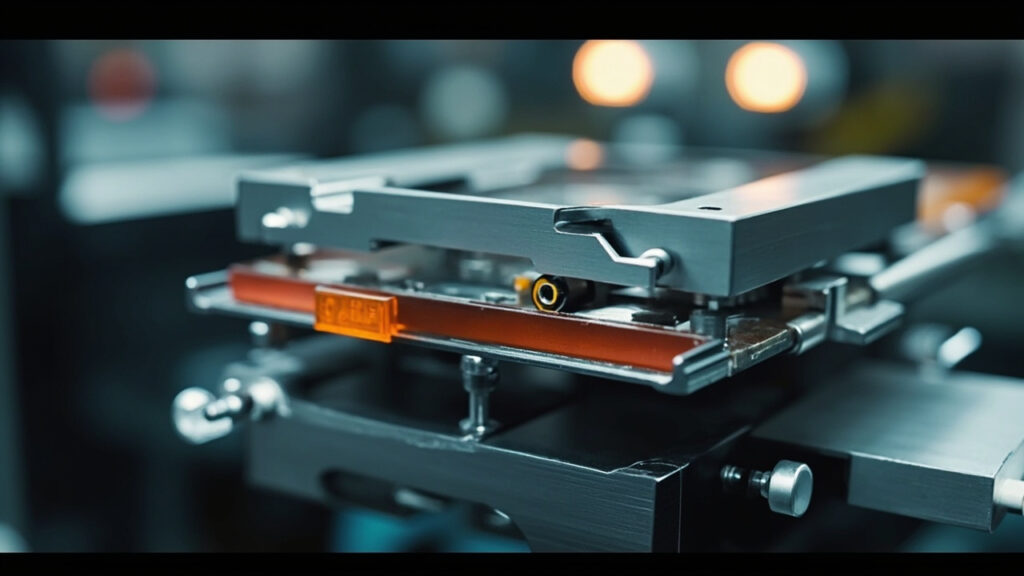
Custom fixtures and tooling are specialized devices designed to hold, support, or guide workpieces during manufacturing operations. Unlike standard clamps or vises, they are engineered for specific parts or processes, ensuring precise alignment, repeatable operations, and often improving worker ergonomics and safety. Their application spans from simple assembly jigs to complex test fixtures for printed circuit board (PCB) assemblies.
For example, a fixture might precisely locate a PCB for automated component placement, or hold a complex mechanical housing during a welding operation. The goal is to eliminate variability, reduce setup times, and facilitate consistent quality, especially in high-mix, low-to-medium volume production environments where flexibility and rapid changeover are key. NIST Manufacturing Extension Partnership emphasizes that effective tooling is fundamental to lean manufacturing principles.
Why is Design for Manufacturability (DFM) Crucial for Fixtures?
Design for Manufacturability (DFM) is an engineering methodology focused on optimizing a product's design to facilitate manufacturing, reduce costs, and improve quality. When applied to fixtures and tooling, DFM ensures that the fixture itself can be produced efficiently and will perform its intended function reliably over its lifecycle. This includes considering material selection, machining processes, assembly methods, and maintenance requirements.
Without DFM, a fixture might be overly complex, expensive to produce, difficult to maintain, or even fail prematurely. For instance, designing a fixture with unnecessarily tight tolerances in non-critical areas can significantly increase machining costs without adding functional benefit. Conversely, neglecting critical tolerances can lead to poor part fit and compromised product quality.
How Does DFM Impact Fixture Material Selection?
Material selection for custom fixtures is a critical DFM consideration, directly influencing the fixture's durability, weight, cost, and suitability for its operating environment. Factors such as wear resistance, rigidity, thermal expansion, and chemical compatibility must be evaluated. For example, a fixture used in a high-temperature environment might require a different alloy than one used for room-temperature assembly.
| Material Type | Common Applications | Key Considerations |
|---|---|---|
| Aluminum Alloys | General assembly, light machining jigs | Lightweight, good machinability, corrosion resistance |
| Tool Steels | High wear, precision machining, stamping dies | High hardness, wear resistance, requires heat treatment |
| Stainless Steels | Cleanroom, corrosive environments, food processing | Corrosion resistance, strength, often higher cost |
| Engineering Plastics | Non-marring, electrical insulation, lightweight | Chemical resistance, low friction, specific temperature limits |
| Composites | Lightweight, high strength-to-weight ratio | Specialized applications, higher cost, complex fabrication |
The choice of material also impacts the fabrication method. For example, complex geometries in plastic might be best suited for 3D printing, while high-strength steel components will require CNC milling or grinding. SME provides extensive resources on advanced manufacturing materials and processes.
What are the Key DFM Considerations for Machining Fixtures?
When designing fixtures that will be produced via CNC machining, DFM focuses on simplifying geometries, minimizing setups, and specifying appropriate tolerances. Features like deep pockets, thin walls, or sharp internal corners can increase machining time, tool wear, and cost. Designing with standard tool sizes and radii in mind can significantly reduce fabrication complexity.
- Minimize Undercuts and Complex Features: Reduce the need for specialized tooling or multiple machining operations.
- Standardize Hole Sizes and Threads: Utilize common drill and tap sizes to simplify tooling and reduce costs.
- Specify Realistic Tolerances: Apply tight tolerances only where functionally necessary, as over-specifying increases machining time and cost.
- Consider Tool Access: Ensure cutting tools can easily reach all features without interference.
- Design for Clamping and Workholding: Integrate features that allow the fixture itself to be easily held during its own manufacturing.
These considerations directly translate into reduced manufacturing time and cost for the fixture itself, which is a key aspect of DFM.
How Does an Integrated Manufacturer Streamline Fixture Development?
An integrated mechanical and electronics contract manufacturer, like Four Points Platinum, offers a significant advantage in developing custom fixtures and tooling. By providing both CNC machining and PCB assembly capabilities under one roof, they eliminate the hand-offs and communication gaps that typically occur when working with separate suppliers. This single-source accountability ensures that mechanical and electronic aspects of a fixture are coordinated from the design phase through production.
For example, a test fixture for an electronic assembly requires precise mechanical alignment for probes and connectors, as well as the integration of a custom PCB for signal routing and testing. An integrated partner can design the mechanical housing, machine it to exact specifications, and then populate the associated test PCB, all while maintaining coordinated tolerances and a unified project schedule. This approach reduces lead times and improves overall project continuity, especially for complex assemblies that require both mechanical and electronic elements.
One Supplier vs. Separate Machine Shop and EMS for Fixtures
The choice between a single integrated supplier and separate specialized shops for fixture development has significant implications for project management, cost, and quality.
| Feature | Integrated Manufacturer (e.g., Four Points Platinum) | Separate Machine Shop & EMS |
|---|---|---|
| Design Coordination | Unified DFM for mechanical and electronic elements | Requires active coordination by OEM, potential for misalignment |
| Project Management | Single point of contact, streamlined communication | Multiple vendors, increased communication overhead |
| Lead Time | Often reduced due to concurrent engineering, fewer hand-offs | Longer due to sequential processes, potential for delays |
| Accountability | Single entity responsible for entire fixture | Divided accountability, potential for blame shifting |
| Cost Efficiency | Potential for overall cost savings through optimization | May incur higher overhead from managing multiple vendors |
| Quality Control | Coordinated inspection and quality gates across disciplines | Requires OEM to manage quality across disparate suppliers |
| Prototyping | Faster iteration with combined capabilities | Slower iteration due to external dependencies |
Four Points Platinum, established in 2009 in Pflugerville, Texas (Austin metro), provides integrated mechanical and electronics manufacturing. This includes CNC machining, fabrication, assembly, and box builds for mechanical components, alongside PCB assembly, SMT, and through-hole assembly for electronics. This comprehensive capability allows for end-to-end support from rapid prototyping to full-scale production of fixtures and tooling, with design-for-manufacturability consultation. For more on this, see [High-Mix, Low-to-Medium Volume Production for OEMs](/insights/blog/high-mix-low-to-medium-volume-production-for-oems).
What Information Should Be Included in an RFQ for a Complete Fixture Assembly?
When requesting a quote for a custom fixture, providing comprehensive and detailed information is crucial for receiving accurate pricing and lead times. A well-structured Request for Quote (RFQ) minimizes assumptions and ensures the supplier fully understands the project scope and requirements. This is especially important for complete fixture assemblies that combine mechanical and electronic components.
A complete RFQ for a custom fixture assembly should include:
- Detailed 3D CAD Models and 2D Drawings: Provide models for all mechanical components and the overall assembly, with critical dimensions, tolerances, and material callouts.
- Bill of Materials (BOM): List all components, including commercial off-the-shelf (COTS) parts, fasteners, and any electronic components (e.g., connectors, sensors, custom PCBs).
- Electronic Schematics and PCB Layout Files: For fixtures with integrated electronics, provide Gerber files, netlists, and assembly drawings for any custom PCBs.
- Functional Requirements: Clearly describe the fixture's purpose, how it will be used, the part it will hold, and the operation it facilitates.
- Key Performance Indicators (KPIs): Specify critical parameters such as repeatability, accuracy, cycle time targets, and expected lifespan.
- Production Volume and Usage Frequency: Indicate how many units of the fixture are needed and the expected production volume of the product it supports.
- Environmental Conditions: Detail the operating environment (temperature, humidity, presence of chemicals, ESD requirements).
- Inspection and Test Requirements: Outline any specific inspection criteria or functional tests the fixture must pass.
- Packaging and Shipping Instructions: Specify how the finished fixture should be packaged and shipped.
Documented workflows for quoting, scheduling, inspection, and change control are essential for managing complex fixture projects.
How Does Fixture Design Support Prototype to Production Transition?
Custom fixtures play a vital role in the transition from prototype to repeatable production. In the prototyping phase, simple, often manually operated fixtures might be sufficient to validate design concepts. However, as production scales, more robust, precise, and often automated fixtures become necessary to maintain quality and efficiency. This evolution requires a strategic approach to fixture design, considering future production needs from the outset.
For example, an initial prototype might use a 3D-printed jig, but for low-volume production, a CNC-machined aluminum fixture with integrated sensors might be required. For high-volume production, a more complex, automated fixture with pneumatic clamping and vision system integration could be justified. Four Points Platinum supports this transition, offering services from rapid prototyping to full-scale production, with design-for-manufacturability feedback and blanket order inventory programs for production continuity. You can learn more about this process at [Product Development: Prototype to Production with a Single Partner](/insights/blog/seamless-product-development-prototype-to-production-with-a-single-partner).
What are the Benefits of Blanket Orders for Fixtures?
For OEMs and hardware companies requiring production continuity and supply-chain security, blanket order inventory programs for fixtures can be highly beneficial. A blanket order allows a customer to commit to purchasing a certain quantity of fixtures over a defined period, but take delivery in smaller, scheduled releases. This provides several advantages:
- Cost Savings: Often, a higher volume commitment can lead to better unit pricing from the supplier.
- Guaranteed Supply: Ensures that fixtures are available when needed, reducing the risk of production delays.
- Reduced Lead Times: The supplier can plan production in advance, leading to shorter lead times for individual releases.
- Inventory Management: The supplier holds the inventory until needed, reducing the customer's warehousing costs.
- Production Continuity: Critical for maintaining consistent output, especially for high-mix, low-to-medium volume production.
This approach is particularly valuable for fixtures that are subject to wear and tear and require periodic replacement, or for supporting ongoing production lines.
What are the Considerations for Fixture Maintenance and Longevity?
The longevity and consistent performance of custom fixtures are crucial for maintaining production quality and efficiency. Fixture design should incorporate considerations for maintenance, repair, and potential wear over time. This includes selecting durable materials, designing for easy component replacement, and establishing clear maintenance schedules.
- Material Durability: Choose materials resistant to wear, corrosion, and fatigue based on the operational environment and expected usage. For example, hardened tool steels are often used for high-wear components, while anodized aluminum provides corrosion resistance.
- Modular Design: Design fixtures with modular components where possible. This allows for easier replacement of worn parts without having to scrap the entire fixture.
- Accessibility for Cleaning and Inspection: Ensure critical areas of the fixture are accessible for routine cleaning and visual inspection to identify wear or damage early.
- Clear Documentation: Provide comprehensive documentation, including assembly instructions, material specifications, and recommended maintenance procedures.
- Calibration and Verification: For precision fixtures, establish a regular calibration and verification schedule to ensure continued accuracy. ISO standards often provide guidance on quality management systems that include equipment maintenance and calibration.
Proper maintenance extends the life of a fixture, reduces unexpected downtime, and ensures consistent product quality throughout its operational lifespan.
How Do Fixtures Support Quality Control and Inspection?
Custom fixtures are indispensable tools for quality control and inspection processes in manufacturing. They provide a repeatable and precise method for presenting parts for measurement, visual inspection, or functional testing. This ensures that every part is assessed under identical conditions, leading to more reliable and consistent quality data.
For example, a go/no-go gauge is a simple type of fixture used to quickly verify if a part dimension falls within specified tolerances. More complex inspection fixtures might incorporate vision systems, probes, or sensors to automatically check multiple parameters. For electronic assemblies, "bed of nails" test fixtures are common, precisely contacting test points on a PCB to verify electrical functionality. These fixtures are critical for ensuring that products meet specifications before they move to the next stage of assembly or are shipped to customers.
Customers like Dell, IBM, and 3M rely on such precision in their supply chains.
Frequently Asked Questions
What is the difference between a jig and a fixture?
A jig guides a tool, while a fixture holds the workpiece in a specific position. For example, a drill jig guides a drill bit to create holes in precise locations, whereas a milling fixture holds a part securely during a milling operation. Both are types of custom tooling designed to improve manufacturing accuracy and efficiency.
How long does it take to design and fabricate a custom fixture?
The timeline for designing and fabricating a custom fixture varies significantly based on complexity, material, and required precision. Simple jigs might take a few days, while complex, multi-component test fixtures with integrated electronics could take several weeks or months. Early engagement with a manufacturer for DFM feedback can help optimize the schedule.
Can existing fixtures be modified or upgraded?
Yes, existing fixtures can often be modified or upgraded to accommodate design changes, improve performance, or extend their lifespan. This process typically involves assessing the current fixture, identifying areas for improvement, and then designing and implementing the necessary mechanical or electronic modifications. An integrated manufacturer can efficiently handle both aspects.
What are the cost drivers for custom fixtures?
The primary cost drivers for custom fixtures include design complexity, material cost, machining time, required tolerances, and any integrated electronic components. Highly precise fixtures made from expensive materials with intricate geometries will naturally cost more than simpler designs. Volume also plays a role, as design costs can be amortized over multiple units.
How do I ensure my fixture design is robust and reliable?
Ensuring a robust and reliable fixture design involves rigorous application of DFM principles, selecting appropriate materials, and thorough testing. Collaborating with an experienced integrated manufacturer from the initial design phase allows for expert feedback on manufacturability, material suitability, and potential failure points, leading to a more durable and reliable solution.
Next Step
To discuss your specific requirements for custom fixtures and tooling, and to explore how integrated mechanical and electronics manufacturing can benefit your production process, contact a specialist in precision contract manufacturing.