
Blog
Design for Manufacturability: Optimizing Your CAD for Production
If you have a CAD design that needs to be reviewed for manufacturability, an integrated contract manufacturer can provide crucial feedback. This process, known as Design for Manufacturability (DFM), ensures your design is optimized for efficient, cost-effective, and reliable production.
Engaging a partner like Four Points Platinum, which offers both mechanical and electronics manufacturing, allows for a holistic review of your complete assembly.
Key Takeaways
- Design for Manufacturability (DFM) reviews are essential for identifying and resolving potential production issues early in the design cycle.
- An integrated mechanical and electronics contract manufacturer provides a single point of accountability for DFM, coordinating tolerances across both domains.
- DFM feedback from a manufacturing partner can significantly reduce material waste, assembly time, and overall production costs.
- Early DFM engagement facilitates a smoother transition from rapid prototyping to repeatable, full-scale production runs.
- Incorporating DFM principles improves product reliability and performance by addressing potential failure points before manufacturing begins.
The transition from a conceptual CAD design to a tangible, functional product involves numerous considerations beyond initial form and fit. Manufacturability is paramount, influencing everything from material selection and tooling costs to assembly time and final product quality. A thorough DFM review proactively addresses these challenges, preventing costly redesigns and delays down the line.
What is Design for Manufacturability (DFM) and Why Does It Matter?
Design for Manufacturability (DFM) is an engineering methodology that involves optimizing a product's design to facilitate its manufacturing process. The core objective is to reduce manufacturing costs, improve product quality, and shorten time-to-market without compromising functionality or performance. This is achieved by simplifying designs, standardizing components, and selecting appropriate materials and processes.
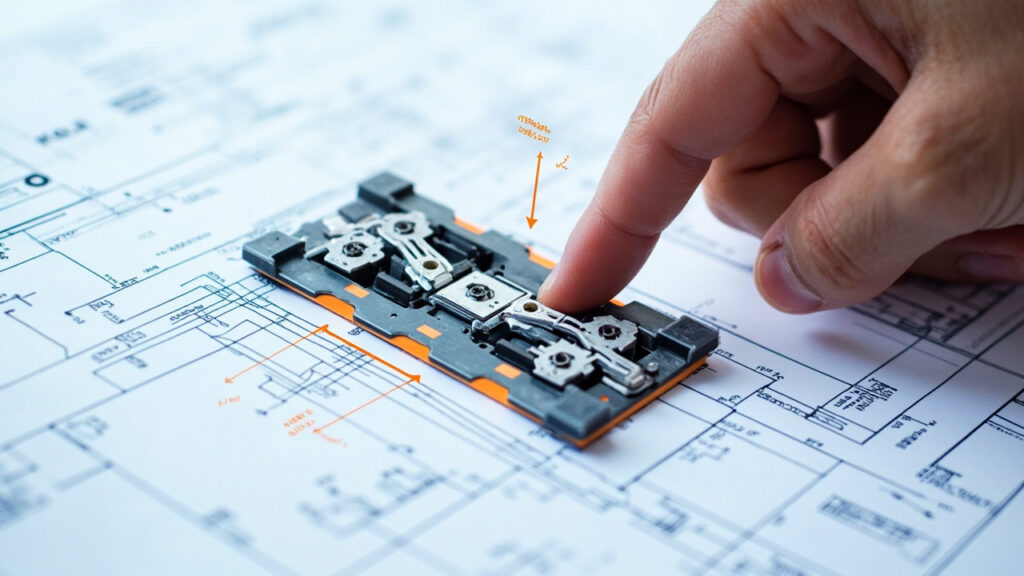
For complex assemblies involving both mechanical and electronic components, DFM becomes even more critical. Coordinated tolerances between mechanical enclosures and PCB mounting points, for instance, are vital for proper fit and function. Without an integrated DFM approach, issues identified in one domain might necessitate costly changes in the other, leading to iterative delays and increased expenses. The National Institute of Standards and Technology (NIST) highlights DFM as a key strategy for enhancing manufacturing competitiveness by reducing waste and improving efficiency NIST.
How Does an Integrated Manufacturer Approach DFM for Complex Assemblies?
An integrated mechanical and electronics contract manufacturer, such as Four Points Platinum, approaches DFM with a comprehensive perspective, considering the entire assembly rather than isolated components. This single-source approach is particularly beneficial for OEMs and hardware companies requiring integrated mechanical and electronics manufacturing under one roof. The DFM process typically involves several stages, from initial design review to material selection and process optimization.
The primary advantage of an integrated partner is the ability to provide unified feedback on how mechanical and electronic elements interact. This includes assessing the fit of PCBs within enclosures, the routing of cables, thermal management considerations, and the overall assembly sequence. This holistic review ensures that potential conflicts or inefficiencies are identified and resolved early, preventing costly rework during production. Four Points Platinum, for example, offers design-for-manufacturability advisory as part of its end-to-end support, from rapid prototyping to full-scale production.
What Specific Areas Does a DFM Review Cover?
A comprehensive DFM review by an integrated manufacturer examines various aspects of your CAD design, ensuring it is optimized for both mechanical and electronic production processes. This includes evaluating material choices, component selection, assembly methods, and testing procedures. The goal is to identify any design features that could lead to manufacturing difficulties, increased costs, or reduced product reliability.
Key areas of focus include:
- Material Selection: Assessing the suitability of chosen materials for both mechanical strength, thermal properties, and electrical insulation, considering cost and availability.
- Component Standardization: Recommending standard, readily available components over custom or hard-to-source parts to reduce costs and lead times.
- Tolerance Analysis: Reviewing mechanical tolerances to ensure proper fit and function, especially at interfaces between mechanical and electronic subassemblies. This is crucial for avoiding issues like misaligned mounting holes or excessive gaps.
- Assembly Process Optimization: Streamlining the assembly sequence to minimize manual labor, reduce the risk of errors, and facilitate automated processes where possible. This includes considerations for fixturing and tooling.
- Testability: Ensuring the design incorporates adequate test points and access for functional testing and quality control throughout the manufacturing process.
- Design for X (DFX): Beyond manufacturability, DFM often integrates other "Design for X" principles, such as Design for Assembly (DFA), Design for Testability (DFT), and Design for Cost (DFC), to achieve a truly optimized product.
Comparing Integrated DFM vs. Separate Mechanical and EMS Providers
When seeking DFM feedback for a product with both mechanical and electronic components, OEMs face a critical choice: engage separate mechanical and electronics manufacturing service (EMS) providers, or partner with an integrated contract manufacturer. The table below highlights the trade-offs associated with each approach, particularly concerning hand-offs, lead time, and accountability.
| Feature | Separate Mechanical Shop + EMS Provider | Integrated Mechanical & EMS Provider (e.g., Four Points Platinum) |
|---|---|---|
| DFM Coordination | Requires client to coordinate feedback from two distinct entities. | Single point of contact for unified DFM feedback across both mechanical and electronics. |
| Tolerance Management | Risk of misaligned tolerances between mechanical and electronic parts. | Coordinated tolerance stack-up analysis ensures fit for complete assemblies. |
| Supply Chain | Managing two separate supply chains, increasing complexity. | Consolidated supply chain for all components, simplifying procurement and reducing risk. |
| Lead Time | Potential for delays due to hand-offs and communication gaps. | Streamlined process reduces overall lead time from prototype to production. |
| Accountability | Divided accountability; difficult to pinpoint responsibility for issues. | Single-point accountability for the entire assembly, from design review to final product. |
| Cost Implications | Higher overhead from managing multiple vendors; potential for rework. | Reduced total cost of ownership through optimized design and efficient production. |
| Prototyping | Separate prototypes for mechanical and electronic components. | Integrated prototyping allows for simultaneous development and testing of complete assemblies. |
Choosing an integrated partner like Four Points Platinum, which has been in business since 2009 in Pflugerville, Texas, can significantly de-risk the product development process. Their ability to provide one quote for the complete assembly, encompassing CNC machining, precision sheet metal fabrication, PCB assembly, and full box-build assembly, simplifies procurement and ensures coordinated execution. This approach aligns with the principles of efficient product development, as discussed in "Product Development: Prototype to Production with a Single Partner" [/insights/blog/seamless-product-development-prototype-to-production-with-a-single-partner].
What to Include in an RFQ for a Complete Assembly with DFM Needs
When submitting a Request for Quote (RFQ) for a complete assembly that requires DFM review, providing comprehensive information is crucial for receiving accurate and actionable feedback. A well-structured RFQ enables the contract manufacturer to thoroughly understand your project's scope, technical requirements, and production goals. This transparency facilitates a more effective DFM process and ensures that the manufacturer can provide relevant insights.
Here's a breakdown of what to include in your RFQ:
- Project Overview:
- Brief description of the product and its intended application.
- Target market and expected product lifespan.
- Desired production volumes (e.g., prototype, low-volume, high-volume).
- Target cost per unit, if applicable.
- Technical Documentation:
- CAD Files: Provide complete 3D CAD models (e.g., STEP, SolidWorks, Inventor) for all mechanical components and the full assembly.
- 2D Drawings: Include detailed 2D drawings with critical dimensions, tolerances, and material specifications.
- Bill of Materials (BOM): A comprehensive BOM listing all components (mechanical and electronic), part numbers, manufacturers, and quantities.
- Gerber Files and PCB Schematics: For electronic components, provide all necessary PCB design files.
- Assembly Instructions: Any existing assembly instructions or sequences.
- Test Procedures: If available, outline functional test requirements.
- Specific DFM Requirements:
- Clearly state that DFM review and feedback are expected as part of the engagement.
- Highlight any specific areas of concern or known challenges in your design.
- Indicate if you require assistance with material selection or component sourcing.
- Quality and Compliance:
- Mention any required industry standards (e.g., IPC-A-610 for electronics assembly IPC, ISO 9001 for quality management ISO).
- Specify any necessary certifications or regulatory compliance (e.g., ITAR, RoHS, REACH).
- Describe your quality inspection criteria.
- Logistics and Timeline:
- Desired lead times for prototyping and initial production runs.
- Shipping requirements and preferred logistics.
- Information on blanket order programs or inventory readiness needs.
Providing this level of detail upfront allows a partner like Four Points Platinum to conduct a more accurate DFM assessment and provide a comprehensive quote. Their documented workflows for quoting, scheduling, inspection, and change control ensure a transparent and efficient process from the outset.
Moving from Prototype to Production with DFM Guidance
The journey from a CAD design to a market-ready product often involves several iterations, starting with prototyping and scaling up to full production. DFM guidance is invaluable at each stage, ensuring a smooth and cost-effective transition. Early DFM input during the prototyping phase can prevent fundamental design flaws from being carried into production, saving significant time and resources.
For instance, rapid prototyping allows for physical validation of design concepts. With DFM feedback, prototypes can be refined to address manufacturing challenges before committing to expensive tooling. This iterative process, supported by an integrated manufacturer, ensures that the design is not only functional but also optimized for efficient production at scale. Four Points Platinum supports this transition with end-to-end services from rapid prototyping to full-scale production, including design-for-manufacturability consultation.
This approach is particularly beneficial for high-mix, low-to-medium volume production for OEMs, as detailed in their article [/insights/blog/high-mix-low-to-medium-volume-production-for-oems].
How DFM Impacts Production Continuity and Supply Chain Security
Beyond initial cost savings, DFM plays a critical role in ensuring production continuity and supply chain security for OEMs. By optimizing designs for manufacturability, companies can mitigate risks associated with component obsolescence, material shortages, and complex assembly processes. A well-designed product is inherently more resilient to supply chain disruptions.
Consider the impact of component selection. DFM often recommends using readily available, standard components. This reduces reliance on single-source suppliers and makes it easier to find alternative parts if a primary component becomes unavailable. Furthermore, simplified assembly processes, a direct outcome of DFM, reduce the likelihood of production bottlenecks and quality control issues, contributing to more stable and predictable manufacturing schedules.
For OEMs that need production continuity and supply-chain security, blanket-order inventory programs, coupled with robust DFM, are essential.
Frequently Asked Questions
How early should I involve a manufacturer for DFM review?
It is most effective to involve a manufacturer for DFM review as early as possible in the design process, ideally during the conceptual or early CAD modeling phase. Early engagement allows for fundamental design changes to be made with minimal cost and disruption, preventing costly rework later in the product development cycle.
What are the main benefits of DFM for my product?
The main benefits of DFM for your product include reduced manufacturing costs, improved product quality and reliability, shorter time-to-market, and enhanced production efficiency. By optimizing your design for manufacturing processes, DFM helps to minimize material waste, streamline assembly, and prevent costly production errors.
Can DFM help reduce the cost of my product?
Yes, DFM can significantly reduce the cost of your product by identifying opportunities for material optimization, component standardization, and process simplification. By making designs easier and more efficient to manufacture, DFM directly impacts tooling costs, labor expenses, and material waste, leading to a lower overall unit cost.
What kind of feedback can I expect from a DFM review?
From a DFM review, you can expect concrete, actionable feedback on your CAD design, covering aspects such as material suitability, tolerance recommendations, assembly sequence improvements, and potential cost-saving opportunities. An integrated manufacturer will provide insights on both mechanical and electronic aspects, ensuring a holistic optimization for your complete assembly.
Is DFM only for high-volume production?
No, DFM is beneficial for all production volumes, from rapid prototyping and low-volume runs to high-volume manufacturing. While the cost savings are more pronounced in high-volume production, DFM principles applied to prototypes and low-volume runs ensure that designs are scalable and ready for efficient production when volumes increase.
Next Step
Submit your CAD design and RFQ to an integrated contract manufacturer for a comprehensive design for manufacturability review.