Blog
Preparing Manufacturing Drawings and Documentation for Production
Moving an engineering design into production requires meticulous manufacturing drawings and comprehensive documentation to ensure precision and repeatability. Integrated mechanical and electronics contract manufacturers, particularly those specializing in custom machined parts in Texas, can provide critical support in this transition.
They help translate design intent into actionable production instructions, minimizing errors and optimizing manufacturing processes.
Key Takeaways
- Accurate manufacturing drawings and documentation are essential for successful production of custom machined parts.
- A single-source integrated manufacturer can streamline the documentation process for both mechanical and electronic assemblies.
- Design-for-manufacturability (DFM) feedback during documentation preparation can significantly reduce production costs and lead times.
- Comprehensive documentation ensures consistent quality, facilitates change control, and supports long-term supply chain security.
- Partnering with a Texas-based contract manufacturer offers expertise in local supply chains and production standards.
The journey from a validated engineering design to a mass-produced product is complex, demanding a rigorous approach to documentation. This process is especially critical for OEMs and hardware companies that rely on custom machined parts and integrated assemblies. Without clear, unambiguous instructions, even the most innovative designs can encounter significant hurdles during manufacturing, leading to costly delays and quality issues.
Why are Detailed Manufacturing Drawings Critical for Custom Machined Parts in Texas?
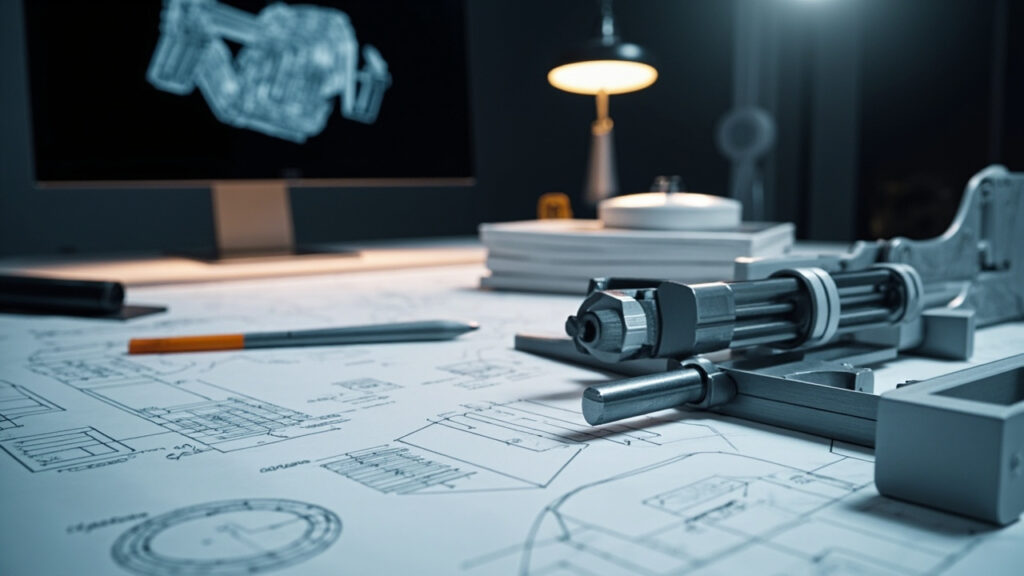
Detailed manufacturing drawings serve as the blueprint for production, communicating precise specifications, tolerances, and material requirements to machinists and assembly technicians. For custom machined parts, particularly those produced in a high-demand region like Texas, these drawings dictate every aspect of the component's creation. They ensure that each part meets the exact design intent, which is crucial for the functionality and reliability of the final product. Without comprehensive drawings, inconsistencies can arise, leading to fitment issues, performance degradation, and increased scrap rates.
The American Society of Mechanical Engineers (ASME) Y14.5 standard, for instance, provides guidelines for dimensioning and tolerancing, ensuring that engineering drawings are universally understood across manufacturing disciplines ASME. Adhering to such standards is paramount for achieving interoperability and quality control, especially when multiple suppliers might be involved in different stages of a product's lifecycle. A contract manufacturer with expertise in these standards can help translate complex designs into production-ready drawings that minimize ambiguity and maximize manufacturing efficiency.
What Documentation is Needed Beyond Drawings for Production Readiness?
Beyond the core manufacturing drawings, a comprehensive documentation package for production readiness includes several critical elements. These documents provide context, process instructions, and quality control parameters that are vital for consistent and efficient manufacturing. This holistic approach ensures that every aspect of the production process is clearly defined and controlled, from material procurement to final assembly and testing.
Key documentation components include:
- Bill of Materials (BOM): A complete list of all raw materials, components, and sub-assemblies required for the product, including part numbers, quantities, and approved suppliers.
- Assembly Instructions: Step-by-step guides detailing how individual components are put together, including torque specifications, fastening methods, and special handling instructions.
- Inspection and Test Procedures: Protocols for quality control checks at various stages of production, outlining acceptance criteria, measurement methods, and required equipment.
- Work Instructions: Detailed guides for specific manufacturing operations, often including visual aids, safety precautions, and tool requirements.
- Revision Control Log: A record of all changes made to the design and documentation, including dates, reasons for changes, and approval signatures, critical for maintaining product integrity over time.
- Material Specifications: Detailed information on the properties and grades of materials used, ensuring compliance with design requirements and industry standards.
This comprehensive suite of documents forms the backbone of a robust manufacturing process, enabling consistent production quality and facilitating effective troubleshooting. For integrated mechanical and electronics assemblies, the coordination of these documents across disciplines is particularly challenging but essential for a successful outcome.
How Can Design-for-Manufacturability (DFM) Improve Documentation and Production of Custom Machined Parts?
Design-for-Manufacturability (DFM) is a proactive approach that integrates manufacturing considerations into the design process, significantly impacting the quality and efficiency of production documentation. By involving manufacturing experts early, potential production challenges for custom machined parts can be identified and addressed before drawings are finalized. This iterative feedback loop ensures that designs are not only functional but also practical and cost-effective to produce.
DFM principles focus on simplifying designs, standardizing components, and selecting materials and processes that are optimized for manufacturing. For example, a DFM review might suggest minor geometry changes to a custom machined part that reduce machining time, minimize material waste, or eliminate the need for specialized tooling, all while maintaining or improving performance. These insights are then directly incorporated into the manufacturing drawings and work instructions, making the documentation more robust and the production process more streamlined.
Consider the impact of DFM on a complex assembly:
| Aspect | Without DFM Review | With DFM Review |
|---|---|---|
| Drawing Complexity | Potentially intricate features, difficult to machine | Simplified geometries, optimized for standard processes |
| Tolerances | Tighter than necessary, increasing cost and scrap | Optimized tolerances, balancing function and manufacturability |
| Material Usage | Higher waste due to complex cuts | Minimized waste through efficient design and nesting |
| Assembly Steps | More manual steps, potential for errors | Fewer, clearer steps, often enabling automation |
| Documentation | Requires extensive clarification during production | Clear, unambiguous instructions, fewer questions |
| Production Cost | Higher due to rework, scrap, and specialized tooling | Lower due to efficiency and reduced material waste |
Four Points Platinum offers design-for-manufacturability advisory services, helping OEMs and hardware companies refine their designs for optimal production. This early engagement ensures that the manufacturing drawings and documentation are inherently robust, leading to smoother transitions from prototype to full-scale production. You can learn more about this process at [Product Development: Prototype to Production with a Single Partner](/insights/blog/seamless-product-development-prototype-to-production-with-a-single-partner).
What Role Does a Single-Source Manufacturer Play in Streamlining Documentation for Integrated Assemblies?
For OEMs and hardware companies requiring integrated mechanical and electronics assemblies, a single-source manufacturer simplifies the entire documentation process. Instead of managing separate documentation packages for mechanical components (like custom machined parts or sheet metal fabrication) and electronic components (like PCB assemblies), a single partner coordinates all aspects under one roof. This eliminates the complexities of managing hand-offs between multiple suppliers, reducing the risk of miscommunication and ensuring consistent quality across the entire product.
When working with separate machine shops and EMS providers, the documentation often needs to be translated or reinterpreted at each interface, introducing potential for errors and delays. A single-source provider, such as Four Points Platinum, which offers both CNC machining and PCB assembly, maintains a unified approach to documentation. This means that mechanical drawings, electronic schematics, and assembly instructions are developed and managed cohesively, ensuring that all components fit and function together as intended. This integrated approach is particularly beneficial for complex box-build assemblies where mechanical and electronic elements are tightly intertwined.
Here's a comparison of documentation management:
| Aspect | Separate Machine Shop & EMS Provider | Single-Source Integrated Manufacturer |
|---|---|---|
| Documentation Origin | Two distinct sets of drawings and instructions | Unified documentation package for entire assembly |
| Coordination | Requires extensive client oversight and translation | Internal coordination, single point of contact |
| Revision Control | Potential for discrepancies between mechanical/electronic revisions | Centralized revision control for all components |
| DFM Feedback | Often siloed, mechanical DFM separate from electronics DFM | Integrated DFM feedback across all disciplines |
| Accountability | Divided accountability for fit and function | Single-point accountability for complete assembly |
| Lead Time Impact | Increased lead times due to hand-offs and reviews | Reduced lead times through streamlined processes |
This integrated approach not only streamlines documentation but also enhances overall project efficiency and reduces the total cost of ownership for complex products. You can explore more about high-mix, low-to-medium volume production for OEMs at [High-Mix, Low-to-Medium Volume Production for OEMs](/insights/blog/high-mix-low-to-medium-volume-production-for-oems).
How Do Blanket Orders and Inventory Programs Impact Documentation and Production Continuity?
Blanket orders and inventory programs are crucial for ensuring production continuity and supply-chain security, and they directly influence the nature and management of manufacturing documentation. For OEMs and hardware companies, these programs allow for predictable production schedules and buffer against supply chain disruptions, especially for custom machined parts and critical electronic components. The documentation supporting these programs must be robust and well-managed to ensure that parts produced over time remain consistent and meet original specifications.
With a blanket order, a manufacturer commits to producing a certain quantity of parts over an extended period, often with scheduled releases. This requires stable and well-controlled documentation, as any changes to drawings or specifications must be carefully managed through a formal change control process. An effective revision control log becomes paramount to track updates and ensure that all parts produced under the blanket order adhere to the latest approved version. This minimizes the risk of producing obsolete parts or parts that no longer meet the current design requirements.
Inventory readiness programs, where a manufacturer holds finished goods or critical components in stock, also rely heavily on precise documentation. The stored parts must match the exact specifications outlined in the manufacturing drawings and BOM. Any deviation could lead to costly rework or scrap. Therefore, the documentation acts as the definitive reference for inventory management, ensuring that the right parts are available at the right time.
Key aspects of documentation for blanket orders and inventory programs:
- Strict Revision Control: Every change to a drawing or specification must be documented, approved, and communicated to ensure all production runs use the correct version.
- Clear Material Specifications: Ensuring that materials procured for inventory or blanket orders consistently meet the required standards, preventing variations over time.
- Consistent Inspection Protocols: Documented inspection procedures guarantee that parts produced across different batches maintain uniform quality.
- Traceability Records: Detailed records linking specific production batches to their corresponding documentation versions, enabling quick identification and resolution of any quality issues.
Four Points Platinum offers blanket-order inventory programs, providing production continuity and supply-chain security for OEMs. This service is underpinned by documented workflows for quoting, scheduling, inspection, and change control, ensuring that all parts, including custom machined parts, consistently meet specifications over the life of the program.
What Should Be Included in an RFQ for a Complete Assembly to Ensure Comprehensive Documentation?
When preparing a Request for Quote (RFQ) for a complete assembly, especially one involving custom machined parts and integrated electronics, it is vital to specify documentation requirements clearly. A well-structured RFQ ensures that potential manufacturing partners understand the scope of work and can provide accurate pricing and lead times, including the effort required for documentation preparation and management. This proactive approach prevents misunderstandings and ensures that the final product meets all technical and quality standards.
An RFQ for a complete assembly should go beyond just the design files and include specific requests related to manufacturing documentation. This demonstrates to the supplier that you value a thorough and controlled production process.
Essential elements to include in an RFQ for a complete assembly:
- Detailed 2D and 3D CAD Files: Provide all necessary engineering drawings (e.g., in STEP, IGES, or SolidWorks formats) for mechanical parts and schematics/Gerber files for PCBs.
- Bill of Materials (BOM): A comprehensive BOM with part numbers, manufacturers, quantities, and any approved vendor lists (AVLs).
- Performance Specifications: Clearly define the functional requirements, environmental conditions, and expected performance metrics of the final assembly.
- Quality Standards and Certifications: Specify any required industry standards (e.g., IPC-A-610 for electronics assembly IPC, ISO 9001 for quality management ISO) or regulatory compliance (e.g., ITAR for defense-related products).
- Inspection and Test Requirements: Outline specific inspection points, test procedures, and acceptance criteria for both individual components and the final assembly.
- Packaging and Shipping Instructions: Detail how the finished products should be packaged, labeled, and shipped.
- Documentation Deliverables: Explicitly list all documentation you expect to receive, such as:
- Manufacturing drawings (final production versions)
- Assembly instructions
- Test reports
- Material certifications
- First Article Inspection (FAI) reports
- Certificates of Conformance (CoC)
- Revision history logs
- Change Control Process: Inquire about the manufacturer's proposed process for managing engineering changes and revisions throughout the production lifecycle.
- Lead Time Expectations: Specify desired lead times for prototyping, first article inspection, and full production runs.
- Volume Requirements: Clearly state anticipated production volumes, including initial runs and ongoing demand.
By providing a comprehensive RFQ, OEMs can solicit bids from manufacturers who are capable of not only producing the physical product but also managing the critical documentation that underpinning quality and consistency. This is especially important for custom machined parts in Texas, where a robust manufacturing ecosystem supports diverse production needs.
How Does a Contract Manufacturer in Texas Support Local Supply Chains for Custom Machined Parts?
Partnering with a contract manufacturer in Texas, particularly for custom machined parts, offers significant advantages in leveraging local supply chains. The Austin metro area, where Four Points Platinum is based, boasts a robust manufacturing ecosystem, providing access to a network of specialized material suppliers, finishing services, and logistics providers. This localized approach can lead to reduced lead times, lower shipping costs, and enhanced supply chain resilience.
A Texas-based manufacturer is often deeply integrated into the regional industrial network, allowing for quicker sourcing of raw materials and specialized components. This is particularly beneficial for custom machined parts, where specific alloys or treatments might be required. The proximity to suppliers means faster turnaround times for material acquisition and less reliance on distant, potentially volatile, global supply chains. Furthermore, local partnerships can facilitate more responsive communication and problem-solving, which is critical when dealing with complex engineering challenges or unexpected production issues.
Benefits of a local Texas contract manufacturer for custom machined parts:
- Reduced Transportation Costs: Shorter distances for material and component delivery.
- Faster Lead Times: Quicker access to local suppliers and services.
- Enhanced Communication: Easier face-to-face meetings and rapid issue resolution.
- Supply Chain Resilience: Less exposure to international shipping delays or geopolitical risks.
- Regional Expertise: Knowledge of local regulations, labor markets, and industry trends.
- Support for Local Economy: Fostering regional economic growth and collaboration.
Four Points Platinum, established in Pflugerville, Texas (Austin metro) since 2009, actively engages with the local supply chain to support its integrated mechanical and electronics manufacturing services. This regional focus ensures that OEMs and hardware companies receive high-quality custom machined parts and assemblies with the added benefit of localized support and efficiency. The NIST Manufacturing Extension Partnership (MEP) provides resources and programs to strengthen local manufacturing supply chains NIST.
Frequently Asked Questions
What is the difference between an engineering drawing and a manufacturing drawing?
An engineering drawing defines the design intent and functional requirements of a part, often focusing on theoretical perfect geometry. A manufacturing drawing, derived from the engineering drawing, adds specific details and tolerances necessary for actual production, considering manufacturing processes and capabilities.
How often should manufacturing documentation be reviewed and updated?
Manufacturing documentation should be reviewed regularly, typically annually or whenever there are significant design changes, process improvements, or material substitutions. A formal change control process is essential to manage updates and ensure all stakeholders are working with the latest approved versions.
Can a contract manufacturer help with design-for-assembly (DFA) as well as DFM?
Yes, many contract manufacturers offer Design-for-Assembly (DFA) services in conjunction with DFM. DFA focuses on simplifying the assembly process, reducing part count, and optimizing component interfaces to minimize labor costs and assembly errors, complementing the manufacturability of individual parts. This integrated approach ensures a more efficient and cost-effective production cycle.
What are the risks of inadequate manufacturing documentation?
Inadequate manufacturing documentation can lead to numerous risks, including production errors, inconsistent product quality, increased scrap and rework, longer lead times, and difficulties in troubleshooting or making future design changes. It can also complicate regulatory compliance and product traceability, impacting overall project success.
What is a First Article Inspection (FAI) report and why is it important?
A First Article Inspection (FAI) report documents the verification of the first production part or batch against all engineering drawings and specifications. It is crucial for confirming that the manufacturing process is capable of producing parts that meet all requirements before full-scale production begins, ensuring quality and consistency.
Next Step
To discuss your specific project requirements for custom machined parts and integrated assemblies, and to ensure your manufacturing documentation is production-ready, contact Four Points Platinum for a consultation.