
Blog
Turnkey Contract Manufacturing for Specialized Automation Systems
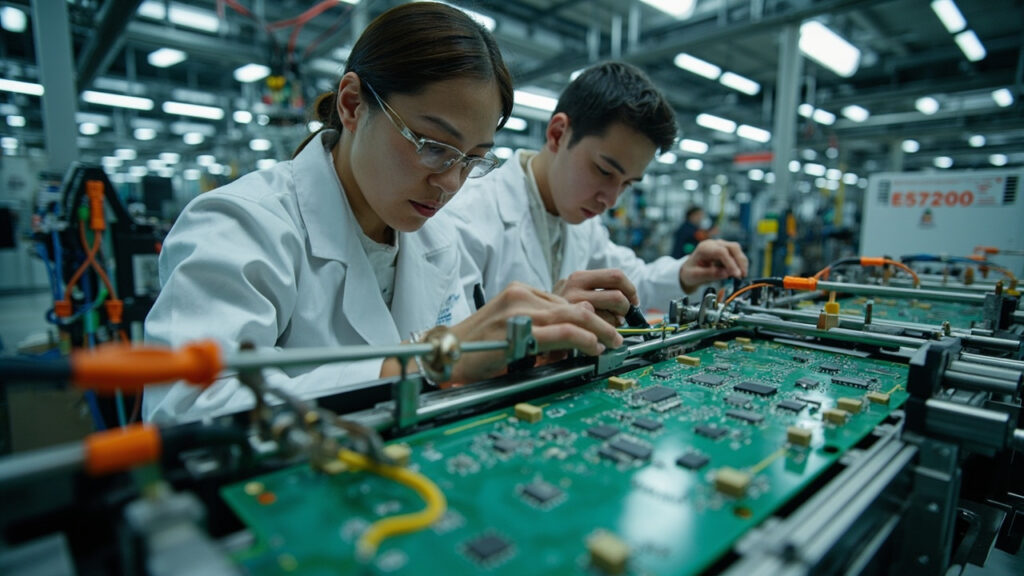
Manufacturers seeking a single source for the complex requirements of specialized automation systems can partner with integrated mechanical and electronics contract manufacturers. These specialized firms handle everything from precision CNC machining and sheet metal fabrication to PCB assembly and full box-builds.
This consolidated approach streamlines production, reduces hand-offs, and ensures coordinated quality across all components.
Key Takeaways
- Integrated contract manufacturers provide a single point of accountability for both mechanical and electronic components of specialized automation systems.
- Consolidating machining, PCB assembly, and final system integration with one supplier reduces lead times and improves overall product quality.
- Design-for-manufacturability (DFM) consultation from an integrated partner helps optimize designs for efficient and cost-effective production.
- Blanket order programs and inventory readiness services ensure supply chain security and production continuity for critical automation components.
- Choosing a partner with documented workflows for quoting, scheduling, inspection, and change control is crucial for complex automation projects.
Specialized automation systems, from robotic arms to industrial control units, demand a unique blend of precision mechanical components and sophisticated electronic assemblies. Traditionally, OEMs might manage multiple suppliers for these distinct manufacturing processes, leading to increased complexity, potential communication gaps, and extended lead times. However, the rise of integrated mechanical and electronics contract manufacturers offers a more efficient and accountable solution for these intricate projects.
Why is integrated manufacturing crucial for specialized automation?
Specialized automation systems often feature tightly integrated mechanical and electronic subsystems where precise fit and function are paramount. When mechanical components are sourced from one vendor and electronics from another, coordinating tolerances, assembly sequences, and quality control becomes a significant challenge. An integrated manufacturer provides a single source, ensuring that all parts are designed and produced to work together. This approach minimizes the risk of interface issues and accelerates the overall development and production cycle.
Consider a robotic end-effector requiring both custom machined aluminum housing and an embedded control board. With separate suppliers, the mechanical shop might not fully understand the electronic board's mounting requirements, or the electronics assembler might receive a housing that doesn't perfectly align. An integrated partner manages both, ensuring that the mechanical design accommodates the electronics precisely and that the final assembly meets all functional specifications.
What are the core capabilities of a turnkey contract manufacturer for automation?
A turnkey contract manufacturer for specialized automation systems offers a comprehensive suite of services under one roof. These capabilities span the entire production lifecycle, from initial prototyping to full-scale manufacturing and final assembly. The goal is to provide OEMs with a single point of contact and responsibility, simplifying procurement and project management.
Key capabilities typically include:
- Precision CNC Machining and Multi-Axis Milling: For complex mechanical parts requiring tight tolerances, such as custom housings, brackets, and structural components. This includes working with various metals and plastics.
- Precision Sheet Metal Fabrication: For enclosures, chassis, and other structural elements that require bending, forming, and welding.
- PCB Assembly (SMT and Through-Hole): Populating printed circuit boards with surface mount technology (SMT) components and traditional through-hole components, ensuring reliable electronic functionality.
- Fixtures and Subassemblies: Designing and manufacturing custom fixtures for testing and assembly, as well as building and testing smaller, integrated subassemblies before final integration.
- Full Box-Build Assembly: The complete integration of all mechanical, electronic, and pneumatic/hydraulic components into a finished, tested product, ready for shipment.
This integrated approach allows for coordinated quality control and streamlined logistics, as all components are produced and assembled within the same operational framework.
How does a single supplier improve project timelines and accountability?
Managing multiple vendors for a complex automation system introduces numerous hand-off points, each representing a potential delay or communication breakdown. When an OEM works with separate machine shops, electronics manufacturers, and assembly houses, coordinating schedules, resolving discrepancies, and assigning accountability for issues can become a significant challenge. A single, integrated supplier eliminates these complexities.
| Aspect | Multiple Suppliers | Integrated Supplier |
|---|---|---|
| Hand-offs | Numerous, between design, mechanical, electronics, assembly | Minimized, internal coordination |
| Lead Time | Extended due to sequential processes and coordination | Reduced through parallel processing and streamlined flow |
| Accountability | Fragmented, difficult to pinpoint responsibility | Single point of contact, clear responsibility |
| Quality Control | Varied standards, potential interface issues | Unified standards, coordinated tolerances |
| Communication | Complex, managing multiple vendor relationships | Simplified, single channel |
| Problem Solving | Slower, requires cross-vendor discussions | Faster, internal team collaboration |
By consolidating these processes, an integrated manufacturer like Four Points Platinum, based in Pflugerville, Texas, can provide a single quote and a unified project schedule. This simplifies procurement and allows the OEM to focus on their core competencies, rather than managing a complex supply chain. The company has been in business since 2009, offering integrated mechanical and electronics manufacturing.
What role does Design-for-Manufacturability (DFM) play in integrated production?
Design-for-Manufacturability (DFM) is a critical aspect of developing specialized automation systems, especially when working with an integrated contract manufacturer. DFM involves optimizing a product's design to facilitate efficient, cost-effective, and high-quality manufacturing. When both mechanical and electronic aspects are considered simultaneously, significant improvements can be achieved.
An integrated partner can provide DFM feedback that considers the interplay between mechanical and electronic components. For instance, they might suggest minor adjustments to a housing design to improve PCB mounting, or recommend alternative component placements to simplify wiring harnesses. This proactive approach helps identify and resolve potential manufacturing challenges early in the design cycle, preventing costly rework and delays down the line. NIST Manufacturing Extension Partnership (MEP) emphasizes that DFM can significantly reduce production costs and time-to-market.
Key areas where DFM consultation from an integrated manufacturer adds value:
- Material Selection: Advising on materials that meet both mechanical strength requirements and electrical insulation needs.
- Tolerance Coordination: Ensuring that mechanical tolerances are compatible with electronic component dimensions and assembly processes.
- Assembly Sequence Optimization: Streamlining the order of operations for both mechanical and electronic integration to minimize labor and potential errors.
- Test Point Accessibility: Designing for easy access to test points on PCBs and mechanical interfaces for efficient quality control.
- Component Standardization: Recommending standard components where possible to reduce costs and improve supply chain reliability.
This collaborative approach from rapid prototyping to full-scale production helps ensure that the final product is robust, reliable, and manufacturable at scale.
How do blanket orders and inventory programs ensure production continuity?
For OEMs and hardware companies that require consistent production of specialized automation systems, ensuring supply chain security and production continuity is paramount. Blanket order programs and inventory readiness services offered by contract manufacturers provide a strategic solution to mitigate risks associated with fluctuating demand, material shortages, and extended lead times.
A blanket order allows an OEM to commit to purchasing a certain quantity of components or finished assemblies over a specified period, without requiring immediate delivery of the entire order. This commitment enables the contract manufacturer to plan production, procure materials in bulk, and often secure better pricing. The OEM then releases smaller, scheduled orders against the blanket purchase order as needed, ensuring a steady supply without holding excessive inventory themselves.
Inventory readiness programs go a step further by having the contract manufacturer maintain a buffer stock of critical components or finished goods. This means that even if there's an unexpected surge in demand or a disruption in the supply chain, the OEM's production schedule remains largely unaffected. This is particularly valuable for specialized automation systems where custom components might have long lead times. These programs are vital for high-mix, low-to-medium volume production for OEMs, as discussed in detail at /insights/blog/high-mix-low-to-medium-volume-production-for-oems.
Benefits of blanket orders and inventory programs:
- Reduced Lead Times: Components are pre-ordered or pre-produced, shortening the time from order release to delivery.
- Cost Savings: Bulk purchasing of materials often leads to lower unit costs.
- Supply Chain Stability: Minimizes the impact of material shortages or supplier disruptions.
- Improved Cash Flow: OEMs avoid holding large amounts of inventory, freeing up capital.
- Production Continuity: Ensures that production lines can keep running even with demand fluctuations.
These programs are a testament to a contract manufacturer's commitment to supporting their clients' long-term production needs and are a key differentiator for integrated partners.
What should be included in an RFQ for a complete automation system assembly?
When requesting a quote for a complete specialized automation system assembly, providing comprehensive and precise information is crucial for receiving accurate and competitive bids. An incomplete or vague Request for Quotation (RFQ) can lead to misunderstandings, delays, and ultimately, higher costs. For complex integrated projects, the RFQ needs to cover both mechanical and electronic specifications in detail.
A well-structured RFQ for a complete assembly should include:
- Detailed Bill of Materials (BOM): List all components, including part numbers, manufacturers, quantities, and any approved alternatives. Specify if components are customer-supplied (consigned) or to be procured by the manufacturer.
- Mechanical Drawings: Provide 2D and 3D CAD files (e.g., STEP, SolidWorks, AutoCAD) for all custom machined parts, sheet metal components, and the overall assembly. Include critical dimensions, tolerances, material specifications, and surface finishes.
- Electronic Schematics and PCB Layout Files: Include Gerber files, drill files, assembly drawings, and netlists for all printed circuit boards. Specify board material, layer count, and any special fabrication requirements.
- Assembly Instructions: Provide step-by-step instructions for the final box-build, including torque specifications, wiring diagrams, and any specific tooling requirements.
- Test Procedures and Requirements: Outline functional test procedures, environmental testing, burn-in requirements, and any specific test fixtures needed. Specify acceptable pass/fail criteria.
- Quality Standards and Certifications: State any required industry standards (e.g., IPC-A-610 for electronics, ISO 9001 for quality management) or specific certifications needed for the product or the manufacturing process. IPC provides widely recognized standards for electronics manufacturing.
- Packaging and Shipping Instructions: Detail how the finished product should be packaged, labeled, and shipped, including any specific logistics requirements.
- Volume and Delivery Schedule: Specify anticipated production volumes (prototype, low-volume, high-volume) and desired delivery timelines.
- Design-for-Manufacturability (DFM) Review Request: Indicate if DFM feedback is desired during the quoting process.
Providing this level of detail enables the integrated contract manufacturer to accurately assess the scope of work, identify potential challenges, and provide a realistic quote and production plan. Documented workflows for quoting, scheduling, inspection, and change control are essential for managing such complex projects effectively.
What are the advantages of partnering with an integrated manufacturer for prototyping to production?
The journey from a specialized automation system prototype to full-scale, repeatable production is complex, involving numerous design iterations, testing phases, and manufacturing adjustments. Partnering with an integrated mechanical and electronics contract manufacturer from the outset offers significant advantages, ensuring a smoother transition and greater consistency across all production stages. This product development from prototype to production with a single partner is detailed further at /insights/blog/seamless-product-development-prototype-to-production-with-a-single-partner.
When an OEM uses separate suppliers for prototyping mechanical parts and electronic assemblies, then potentially different suppliers for production, inconsistencies can arise. A prototype mechanical part might be machined slightly differently than its production counterpart, or an electronic assembly might use components from a different batch, leading to performance variations. An integrated partner maintains consistency throughout the entire lifecycle.
Advantages include:
- Consistent Quality: The same equipment, processes, and quality control standards are applied from the initial prototype build through to high-volume production. This ensures that the production units closely match the validated prototype.
- Accelerated Iteration: Design changes identified during prototyping can be quickly implemented and tested across both mechanical and electronic domains by a single team, reducing iteration cycles.
- Cost Efficiency: Avoiding the need to re-tool or re-qualify new suppliers for each production phase saves time and money. The manufacturer gains familiarity with the product, leading to efficiencies.
- Single Point of Contact: All communication regarding design, manufacturing, and quality remains with one partner, simplifying project management for the OEM.
- Scalability: An integrated manufacturer is equipped to scale production from low-volume prototypes to medium-to-high volume production runs without requiring the OEM to switch suppliers.
- Coordinated Tolerances and Fit: With both mechanical and electronic manufacturing under one roof, the manufacturer can ensure that all components fit together precisely, minimizing assembly issues and improving overall product reliability.
Four Points Platinum, serving OEMs and national brands such as Dell, IBM, and 3M, provides end-to-end support from rapid prototyping to full-scale production, offering coordinated tolerances and fit, and single-point accountability for complete assemblies.
Frequently Asked Questions
How does integrated manufacturing impact the total cost of ownership for automation systems?
Integrated manufacturing can reduce the total cost of ownership by minimizing rework, improving product reliability, and streamlining the supply chain. Fewer hand-offs and consistent quality across mechanical and electronic components lead to fewer field failures and lower warranty costs. Additionally, optimized production processes can reduce manufacturing expenses over the product's lifecycle.
What types of specialized automation systems benefit most from turnkey manufacturing?
Systems with a high degree of mechanical-electronic integration, such as robotic systems, industrial control panels, medical devices with electromechanical components, and complex sensor arrays, benefit significantly. Any system where precise fit, coordinated functionality, and reliable performance across multiple disciplines are critical is an ideal candidate for turnkey manufacturing.
How does an integrated manufacturer handle design changes during production?
An integrated manufacturer typically has documented workflows for change control. This involves a formal process for submitting, reviewing, approving, and implementing design changes across both mechanical and electronic aspects. Their internal teams can quickly assess the impact of a change on all components, ensuring coordinated implementation and minimizing disruption to the production schedule.
What are the risks of using multiple suppliers for a complex automation system?
Using multiple suppliers increases the risk of communication breakdowns, interface issues between components, and fragmented accountability for quality. It can lead to longer lead times due to coordination challenges, higher administrative overhead for the OEM, and potential disputes over who is responsible when problems arise in the final assembly.
Can an integrated manufacturer help with regulatory compliance for automation systems?
While an integrated manufacturer can build to specific standards (e.g., IPC for electronics), they typically do not provide regulatory certification services themselves. However, their expertise in building to precise specifications and their robust quality management systems can significantly support an OEM's efforts in achieving necessary regulatory compliance for their automation systems.
Next Step
To discuss the specific requirements for your specialized automation system and explore how an integrated manufacturing approach can benefit your project, contact Four Points Platinum for a comprehensive consultation and quote.